
Dog at the table, fish on the plate
‘And what if the dog bites one of the customers? How do we know the dog isn’t sick?’ utters José Manuel Esteves, director of the Hotel and Restaurant Association (AHRESP). ‘Than we will be responsible!’
Eunice Marcelino, attorney at the Public Ministry is less concerned. ‘Pets are already allowed on terraces and that has never raised any concerns.’
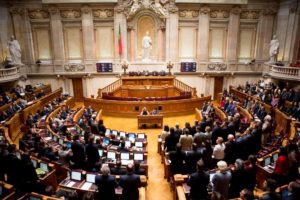 As of next week, a new law enters into force allowing pets in restaurants and bars. ‘With domestic animals, one automatically thinks of cats and dogs but in our legal proposal domestic is not strictly defined’, explains Cristina Rodriguez, MP of the party for Persons, Animals, and Nature (PAN) and one of the submitters of the proposal.
This implicates that any pet is allowed as long as the owner of the restaurant – who always has the final say – raises no objections and the animal is leashed. ‘But the law is of course drafted with dogs in mind, which usually accompany their owners’, declares Maria do Céu Sampaio, president of the League for Animal Rights.
 In most European countries domestic animals are tolerated in food courts.
France is the most pet-friendly in this respect, Scandinavia least.
Small dogs are in general no problem in Italy and Germany but for large dogs, eyebrows are raised.
More than half of the Portuguese households have a pet, which is often considered as ‘member of the family’ or ‘friend.’ Most popular are dogs (42%), ranking well before cats (22%), birds (18%) and fish (5%).
They consume on average around 15% of the family budget.
 According to an investigation in April by the Association for Consumer Protection (DECO), only 20% of the owners consider taking their four-legged friend out to dinner.
‘One of the favorable side effects of this new law might be, that owners are now more motivated to raise their dogs properly, concludes Maria do Céu.
BOM FIM DE SEMANA ENJOY THE WEEKEND (pic SAPO/Público)
 Euthanasia continues to be a crime with prison sentences ranging from two to five years in “the land of the Maria’s” as Parliament
 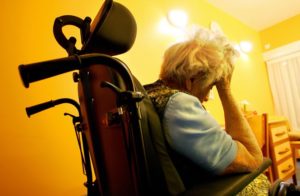 Euthanasia – good death in old Greek – is
  ‘If boys have more privileges and sexual freedom in relationships than girls, there will be more social pressure to behave accordingly: strong, determined and protective’, reveals 18-year-old Catarina Machado. ‘
 In a national survey among university students more than half stated to be victims of dating violence. Some were even threatened with death.
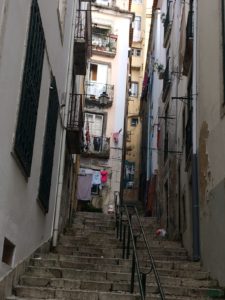 ‘No, it is not okay’, mutters João. ‘We got a letter from the landlord the other day. Our contract expires in November. He wants to increase the rent from 300 to 800 euro a month and reduce the contract period to one year. I’ am sure he’ll increase the rent again next year.
 ‘Where do you live?’, I ask
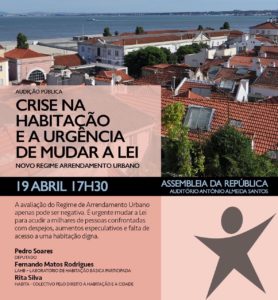 Within five years rents in Lisbon increased by 36%.
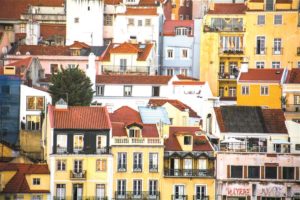 Housing is a priority for this government, that wants to build more affordable accommodation and has set aside 1,7 billion euros to give 26.000 needy families – half of them from Lisbon – a decent home within six years. It also intends to give municipalities the right to claim vacant properties for social habitation.
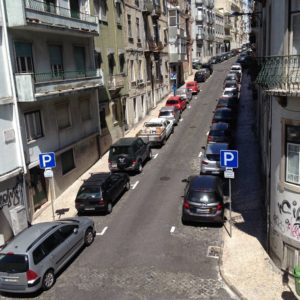 Well, it’s a pity I’ am not one of those families and six years is a long time, especially at my age’, João replies.
 ‘It’s a shame how Portugal treats his refugees’, says Jose Manuel Pureza, MP of the Left Bloc (BE). ’The Portuguese government is – unlike many European countries – willing to accept more refugees. That’s positive. The problem, however, is the practical implementation.’
 ‘People are simply put somewhere and have no say at all in the conditions in which they are accommodated’, Vacchiano emphasizes. ‘As if a refugee doesn’t have a voice of his own. His educational background and profession don’t exist anymore. These are simply deleted.’
 The granting of a residence permit by the SEF ( Serviço de Estrangeiros e Fronteiras) – Portugal’s immigration and border police – takes by and large 12 to 18 months. One can only apply for family reunification áfter obtaining the permit, which takes ‘at least another 5-6 months’, according to SEF.
 Both left and right wing parties in Parliament are concerned about racism in the police force and violation of human rights in prisons. The reason is a recently published report of the European Committee against Torture, stating that police violence in Portugal – in particular against African descendants – is the highest in Western Europe.
 The committee – that also visited the country in 2013 – emphasizes that the police violence at police stations has increased and that the situation in the overcrowded prisons of Caxias, Setubal, and Lisbon is ‘inhuman and degrading.’
 Julia Kozma, lawyer and chairing the European delegation, points the finger towards the Ministry of Internal Affairs – responsible for the police and the security forces – and regrets its lack of ‘awareness’. The Ministry denies the accusations and declares that ‘all complaints about violent police conduct are investigated by the Internal General Inspectorate (IGAI) and immediately reported to the Public Prosecutor.’
 The reality, however, is that only a very small number of the complaints are brought before court. ‘And that’s exactly the problem’, says Kozma. ‘There is a spirit of impunity and bureaucracy, whereby complaining doesn’t help. The inspection body (IGAI) needs more skills to conduct criminal investigations and more resources to act independently.’
 In recent months the non-governmental organization SOS racism received an increasing number of grievances from inmates in the prison of Lisbon about racist provocations and intimidations. Peculiar was that all complaints came from African immigrants and that any registration on xenophobe or racist behavior from the guards and staff is lacking.
 Patients have to wait 3 years to see a urologist in Vila Real or an ENT specialist in Leiria and 2 years to obtain an appointment with a cardiologist in Guarda. These extremes not only occur in the countryside, as the waiting list for a neurological consultation at Amadora Sintra – one of the biggest state hospitals in the country – exceeds more than a year.
 The average waiting period for (non-acute) specialist care in Portugal is 4 months, varying from 6 months for an ophthalmologist to 6 weeks for an obstetrician. Patients who have to wait for more than five months have – by law – the right to be treated in the private sector. A costly buffer as the SNS, respectively the taxpayer must pay the bill.
 The excessive waiting lists are – according to the independent trade union of doctors Sindicato Independente dos Médicos – mainly the result of the fact that specialists in state hospitals have to spend too much – almost half – of their time to emergencies. The majority of the specialists working in the SNS is therefore unsatisfied. Many want to abandon the service and either go into private practice or leave the country, where working conditions are better and the pay higher.
 ‘Wages are indeed low, excess hours abundant and career prospects nil’, explains Maria Ferreira of the Public Health Department of the University of Porto, who conducted an investigation under 15.000 doctors in northern Portugal. ‘Half of the recently qualified doctors is thinking of leaving the country after finishing their specialization and over 1200 doctors have already left in the past 3 years.’
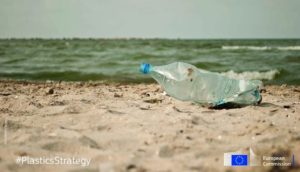
 A draft legislation thereupon was submitted in July 2017 and discussed in Parliament early this year. Heloísa Apolónia – MP of the Ecological and Green Party (PEV) – explains ‘our proposal is to ban the use of plastic disposables in restaurants and bars and to look for biodegradable substitutes within 3 years.’
 António Fonseca, the president of the Association of Bars in the Historic Center of Porto (ABZHP) – that encourages the legalization of the use of alcohol in public places – believes that the plans are irresponsible in the light of the danger glassware can cause in nightlife.
 ‘This earthquake can be considered as moderately severe’, says Fernando Carrilho, chief seismologist at the IPMA (Portuguese Institute of the Sea and Atmosphere). ‘People shouldn’t worry too much as the southern part of the country has always been seismic active.’
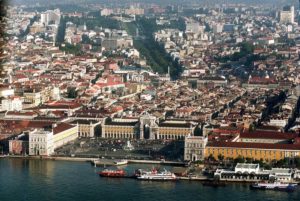 ‘Preventive measures are warranted’, especially in the densely populated areas in the south – like Lisbon and the Algarve – that are most at risk’, says Daniel Oliveira, a civil engineer at the University of Minho. ‘Although a law from 1958 requires earthquake-proof construction, most buildings in the historic capital date from before that time and there is hardly any monitoring of the implementation of the law.’
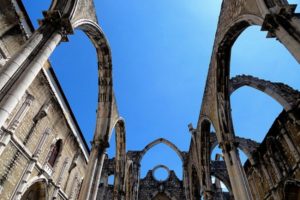 Over the past 500 years, Portugal has suffered four major earthquakes – in 1531, 1755, 1909 and 1969 – with a magnitude of 6 or more on the Richter scale. The biggest and by far most tragic one was in 1755. With a magnitude of 9 on the Richter scale, it developed apocalyptic proportions and completely wiped out the lower part of the capital. This earthquake (terramoto) inspired poets, influenced philosophers, activated prophets and motivated politicians – like the Marquis of Pombal – to a completely new architectural reconstruction of the Baixa, Lisbon’s city center.