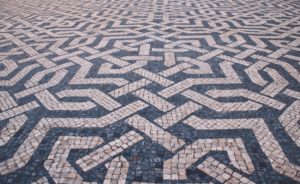
There is much discussion about mass tourism and golden permits but in Portugal one is inclined to say: ‘don’t kill the chicken with the golden eggs.’ Let’s take a closer look at the expanding tourism industry.
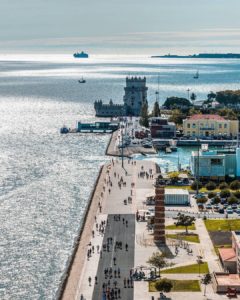 Few destinations have witnessed a boom in tourism like Portugal. According to UN World Tourism Organisation (UNWTO) the country welcomed nearly 7 million international arrivals in 2010. By 2016 that figure had tripled.
Since then tourism revenue has increased by 17%, year-on-year.
 The 10 million visitors to the capital – almost as many as the entire Portuguese population –generated last year almost 14 billion euros and more than 180.000 jobs in the greater Lisbon area. The majority of these tourists – 90% arrived by plane and 75% for a short city break – came from Brazil, France, Spain, the US, and the UK. They spent on average 160 euros per day and usually stayed 2-3 nights.
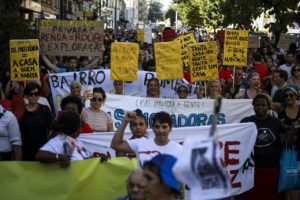
But is overtourism not turning Lisbon into a second Venice, a place saturated with tourists to the point of becoming unsustainable to live in? The increasing number of cruise ships are generating more air pollution than revenues for the local economy and residents in the capital report growing anti-tourist sentiment because of progressive noise and trash nuisance.
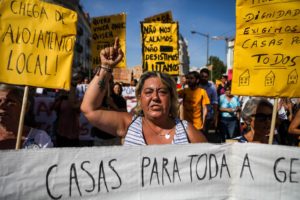 More than one-third of the houses in the historical neighbourhoods – Alfama, Baixa, Castelo, Chiado, and Mouraria– are rented out to tourists.
The Baixa Pombalina – one of the first rehabilitated quarters downtown – is filled with hotels and tourist apartments. 20% of the 22,000 hotel beds in Lisbon are situated here and expected to increase even further.
 The number of short term rentals –in Portugal registered as alojamento local (AL) – has even overtaken Barcelona, that is 3 times bigger than Lisbon. It is not surprising that the City Council urgently wishes new legislation to restrict permits and maximise percentages for AL.
Foreigners – especially French and Englishmen, followed by Brazilian and Chinese – bought in 2017 almost 12 % of the real estate in the country, in particular in booming Lisbon. Not only the poor but increasingly also the middle class is forced to buy a house in the outskirts of the capital. The city centre is becoming more and more a place for the well-off.
Bom fim de semana Have a nice weekend (pic Público/Sapo)
 Portugal has, in fact, the highest prevalence of stroke in Europe. This is probably due to the high number of people with
  A consequence of the widespread existence of stroke and hypertension is the frequent occurrence of dementia.
 Alzheimer is the most common form of dementia in Western Europe. Interesting enough, this is not the case in Portugal. A recent epidemiological study from the University of Porto and
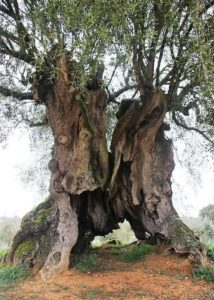 Portugal’s oldest tree – 3350 years old – can be admired in Mouriscas, the municipality of Abrantes. As one of the oldest trees in the world, it has provided shadow to innumerous people, from Celts to Romans and from Visigoths to Arabs. This monumental olive tree is not only a contemporary from pharaoh Ramses II and Moses (1250 years B.C) but also from you and me.
 Another recent breakthrough in the green world has been the unraveling by Portuguese scientists of the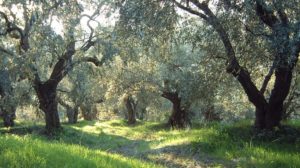
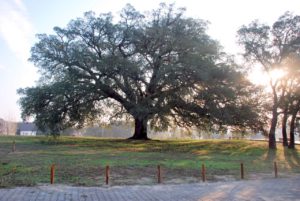 It was on the 21st of March last year that the 234- year- old cork oak from Águas de Moura, a small village in the district of Palmela, was declared ‘
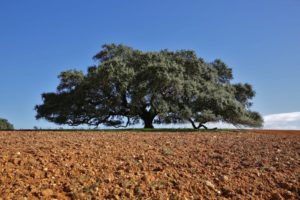 The Portuguese entry for this year’s event – since 2011 organized by the Environmental Partnership Organisation (EPA) in which 15 European countries participate – is once again an oak. This time the 150- year-old
 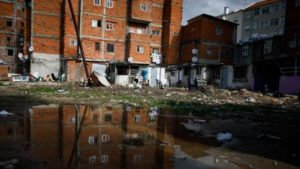 Once again
 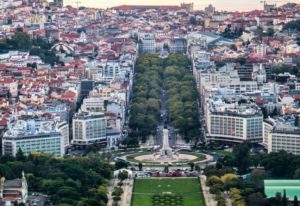 The next day around 300 black youngsters held a spontaneous demonstration at the prestigious Avenida da Liberdade, chanting ‘Stop racist police brutality’.
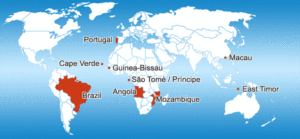 Slums proliferated in Portugal from the 1970s onward due to
  This story of police brutality reminds of the well-known case from February 2015, when 17 policemen were accused of a number of crimes against a group of black young people in Lisbon’s quarter
 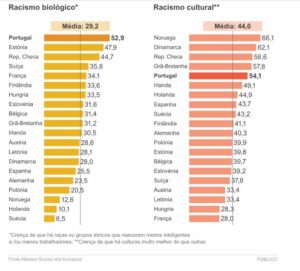 The UN Committee on the Elimination of Racial Discrimination has repeatedly declared being very concerned with racism in Portugal and the lack of measures taken for the benefit of the
  The introduction of sugar cane farming by the Portuguese into Madeira towards the first half of the 15th century – some decades before Columbus discovered America – meant that sugar could be exported, at first through Lisbon and then directly to the ports of Flanders (Antwerp and Bruges). In this way the consumption of the ‘white gold’ spread across the whole of Europe, altering people’s eating habits.
 Although the archipelago of Madeira – geographically isolated in the middle of the Atlantic Ocean – had already been shown on earlier maps, it was only in 1418 that the first Portuguese navigators landed on the island of Porto Santo and subsequently discovered the much bigger island, Madeira.
 The newly introduced sugar-based economy called for important innovations such as ‘sugar mills’ and ‘grinding stones’, together with the use of special moulds that gave rise to the famous ‘sugarloaves’, the form in which refined sugar was produced and sold until granulated and cube sugars were introduced in the late 19th century. A tall cone with a rounded top was the end-product. The larger the loaf the lower the grade of sugar. A common size that time was 6.4 kg but the finest sugar from Madeira came in small loaves of only 1.4 to 1.8 kg.
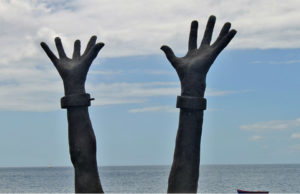 From the very beginning of its origins in Madeira, production completely relied on the use of slave labour. Captives were taken along the coast of North and West Africa and brought to work at the sugar mills. When the sugar production in the much vaster territory of Brazil got underway in the 16th century, Madeira lost its privileged position. Sugar from South America was simply cheaper.
 Sugarloaf mountain (
 January 6. Epiphany – Kings Day – Dia de Reis.
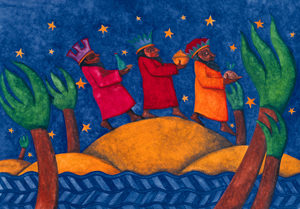 Who were those gift-bearing ‘
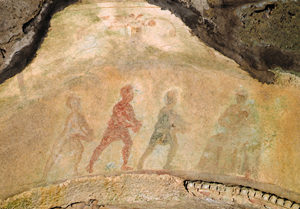 According to other sources dating back to medieval times, the visitors were
  Finally, inside a cave on the outskirts of Bethlehem, the star reappears to them as a luminous human child – the Christ child! There, the men kneel down and present the baby Jesus with their three famous gifts – gold, incense, and myrrh. Tradition has it, that in later years they were baptized, became bishops and spent the rest of their lives spreading Christianity in distant lands.
 Five years after the peak of its economic crisis, Portugal’s future looks bright. There is more confidence, more consumption and there are more young people in college.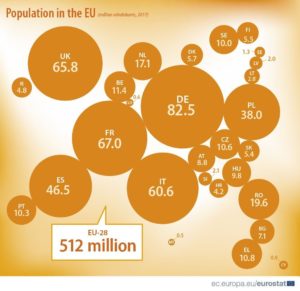
 The country’s workforce is relatively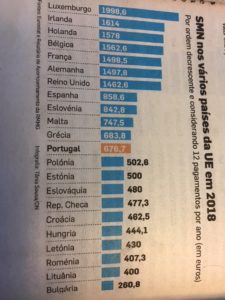

 Last May, Joao Rodriguez – a 95% physically restricted and wheelchair dependent quadriplegic from Figueira da Foz – was happy his brother could bring him to Lisbon, to attend the nationwide
  Eduardo Jorge – quadriplegic, bedridden since age 28 and living in a nursing home – requires continuous care for 24 hours a day. He owns a house and wants to be cared for at home, but doubts if he will get there the 24/7 support, he desperately needs. He demonstrated last week outside
  The intention of the government is to subsidize each centre with
 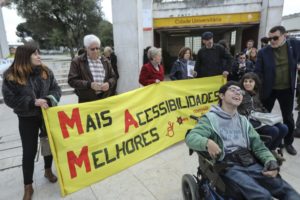 In addition to a greater autonomy, pressure groups demand more jobs and better accessibility of public buildings and
  The Trade Union Association of Portuguese Judges (ASJP) declared in an open letter to the Minister of Justice this year, that at least 55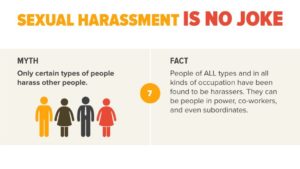
 ‘As long as our society maintains its patriarchal and male chauvinist features, aggression against women is legitimized’, says Elisabeth Brasil of the Assassinated Women’s Observatory (OMA), accusing the government of not providing the necessary support to the victims of
  The legal system doesn’t seem to be very woman-friendly either and courts often continue to disclaim the perpetrators and hold the victims accountable. Only
  In the meantime, the government becomes convinced that the legislation on sexual crimes needs to be reviewed in the light of the
  But not only the Portuguese legislation is inadequate on women abuse, maintaining a culture of blaming the victim and perpetuate impunity.
  Earlier on tens of thousands of visitors invaded the Altice Arena at the
  Their caretakers – with or without their four-legged friend – will be treated to numerous workshops and lectures on training, healthcare, nutrition, and wellbeing. Moreover, the vast exposition area will accommodate a great variety of start-ups and companies offering a large number of services and products to the beloved animals.
 ‘This project is a first in Portugal’, say Cristina Pena and João Brochado – the couple that organizes the event – in the newspaper Público. ‘We want to emphasize a positive approach in the rearing of dogs instead of an aversive approximation. We often come across training methods based on punishment and negative reinforcement, leading to aggressiveness and anxiety in the dog.’
 Therefore, much attention will be given to training methods that respect the
  Animal protection associations – like the civic movement Unchain your Dog (