‘The best technology conference on the planet’ – Forbes
‘Where the future goes to be born’ – The Atlantic
‘The giants of the web assemble’ – Wall Street Journal
‘A great conclave of the tech industry’s high priests’ – New York Times
What do have 70.000 visitors (from 170 countries), 1200 speakers ( one third are women), 2500 journalists, 2000 start-ups, 210.000 coffee cups and a metro strike in common?

They are all part of the Web Summit 2018 (www.websummit.com) – one of the world’s biggest technology and innovation conferences – to be held in Lisbon’s Altice Arena (November 5-8).
The spectacle will be preceded by a Surf Summit in the seaside town Ericeira, continued after hours by a Night Summit downtown and concluded with a Sunset Summit in the Portugal Pavilion at the Parque das Nações.
 The event – created to connect technology with industry – is the global stage for conducting business, recruiting talent and promoting brands.
In 2016 held for the first time in Lisbon, this year’s manifestation will be even bigger and better than the one in 2017, with a tree planted for every participant to encourage sustainability.
 Since the two previous editions yielded 300 million euro annually on accommodation and transport, government persuaded the organization to maintain the Websummit in Lisbon over the next ten years – until 2028 – and is willing to invest therefor 11 million euros per year.
‘I think the summit is a great idea and excellent for the reputation of the country’, says António Saraiva, president of the Confederation of Portuguese Industries (CIP). ‘But I doubt a revenue of 3 billion euros in 10 years. There are very little honest investments with such a big profit.’
 ‘What do these estimates rely on?’ Where is the rationale?
To me, it smells a little bit like a show-off with next year’s elections coming up.’
 The Portuguese Hotel and Restaurant Association (AHRESP) is more optimistic, expecting the 70.000 visitors to spend at least 61 million euros during their stay in the capital.
That the metro will strike on the first and last day of the happening is unfortunate but inevitable in a country like Portugal.
Enjoy your stay (pic SAPO)
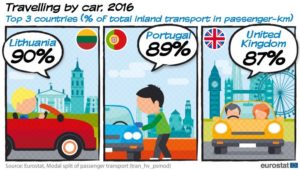
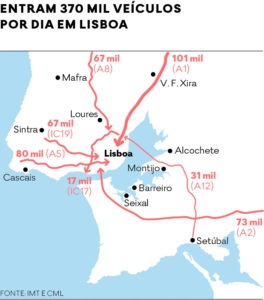
 These large numbers of automobiles not only provoke endless traffic jams in the center but also severe air pollution.
 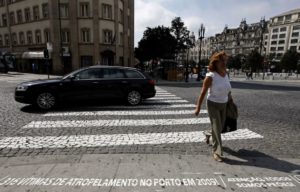 Furthermore, the number of fatal accidents to
  The solution to reducing the use of cars seems straightforward: create alternatives! With this in mind, Fernando Medina, Lisbon’s mayor, advocates a radical reduction in the cost of public transport (metro, bus), extend the number of bus lanes in the metropole and –by means of state funding – enable a free bus
 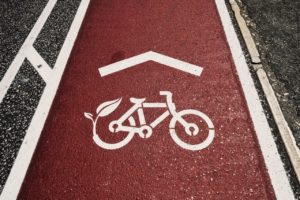 But the government should do much more. Only 15% of public transport in Portugal is subsidized, compared to 50% in the EU. Moreover,
 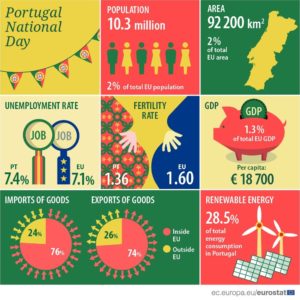 If you are what you eat (drink, smoke) or love (males, females, yourself), then countries certainly aren’t the same. There are after all innumerous appetites and lifestyles. For example, health club membership is twice as high in Spain and three times higher in Denmark.
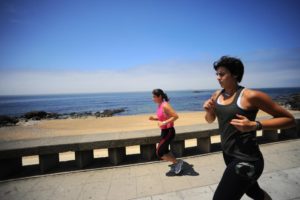 Portuguese people take 4744 steps a day, far less than the Chinese in Hong Kong or even their Spanish neighbours. Two-thirds are not physically
  Portuguese adore cars – one in every two owns one – and use them every day. For everything: commuting, shopping, and outings. Unfortunately, these motorists hardly ever use public transport and are keen to make
  Anti-smoking campaigns aren’t successful at all and overall smoking hasn’t declined in 30 years.
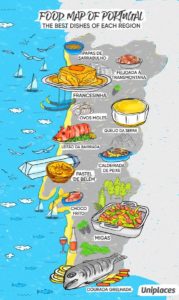 Apparently not. Portuguese people love their culture and are– besides Fado, Football, and Fatima – fond of grilled sardines, Pessoa, Saramago, sunny weather and popular saints. They also
 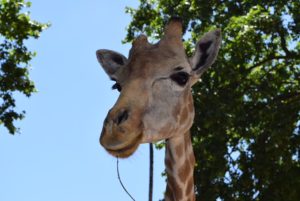 The most stunning, however – at least according to the Observer – are the eyes of their men. Wherever you are in the world, you should look at their
 The pig in Chinese astrology is tolerant and understanding, sympathetic and truthful. Pigs maintain order and authority and believe in justice.
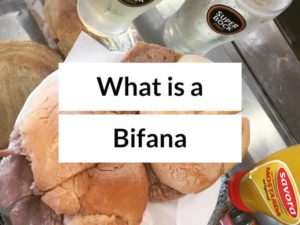 Popular pork
 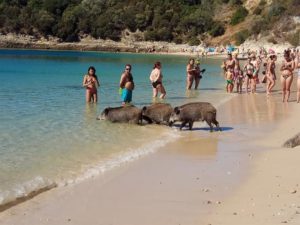 In ancient Egypt, the pig was considered sacred and offered to the Moon, the Greeks honoured the goddess Porca and the Romans feasted on roasted piglets with honey.
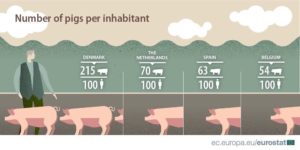 Pig production in Europe is concentrated in a few countries. Denmark has the highest number of pigs per inhabitant, Portugal ten times less.
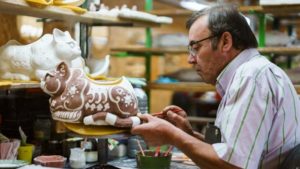
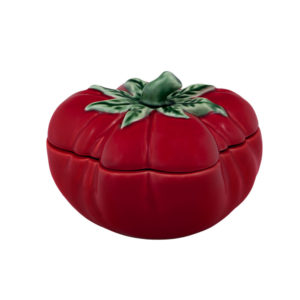 Who doesn’t remember the bright red tomato-shaped bowls, turmeric-coloured pumpkin tureens or pitch-black swallows on the wall in your grannies’ home?
 He created the popular cartoon Zé Povinho – a character of social criticism – who became the symbol of the ordinary Portuguese man.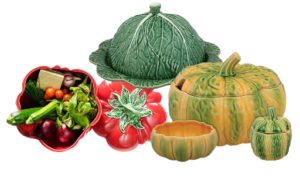
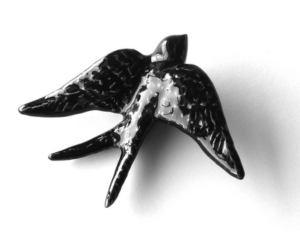 The Bordalo Pinheiro factory –since 1885 based in Caldas da Rainha, 75 km north of Lisbon – works with its own sculptors, who create new moulds from original pieces designed by Bordalo between 1884 and 1910.
 This year the company is opening its first shops abroad, in Paris and Madrid.
 The vast majority of the
  Portuguese drink the most wine worldwide, on average 1 litre per person per week.
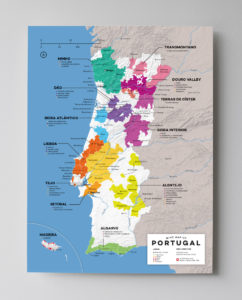 Portugal’s wine culture developed in relative isolation for more than 2000 years. Many grape varieties – there are over 250 indigenous ones – do not grow elsewhere in the world.
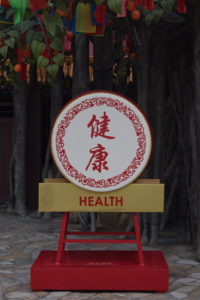 ‘To state that wine causes cancer is simply untrue’, says Georg Sandeman, chairman of the Portuguese Wine and Spirits Association (ACIBEV). ‘Northern countries want to impose their culture on us. In the north of Europe, people use to drink a lot in short periods of time (‘binge drinking’) and often without food. Here, wine is part of our culture, our gastronomy. Of course, excessive use should be reduced but not moderate consumption.’
 The best advice, therefore, is to stick to the American Cancer Society’s
  Lisbon Airport is congested and overcrowded, a victim of a
 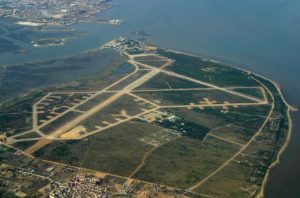 Nevertheless, growth is skyrocketing and a further boost of 10 million passengers is expected over the next 5 years. The 75 years old airport certainly can’t cope, despite its clean appearance, tasty food, and nice shops.
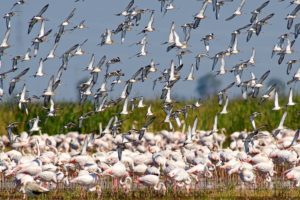 The ecological movement
 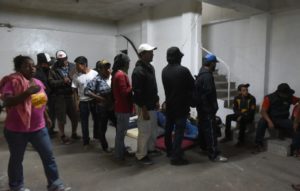 The ruling socialist party wants the government to speed up the
  The reason for the amendment was the large-scale demonstration in May, when immigrants gathered before Parliament, expressing that they were treated like second-rank citizens, even though they paid tax and social insurance.
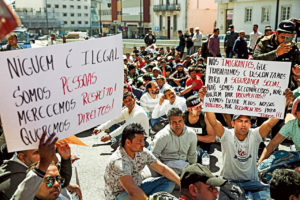 ‘The law doesn’t promote the integration of immigrants, who work here for many years but are not treated as human beings’, says Timóteo Macedo, president of Solidaridade Imigrante (Solim). ‘Our Government argues, that we need more