One or two mothers?
One or two fathers?
In one or two houses?
With one or more sibs?
From one or more parents,
together as long as it takes or until ‘death them part’?
‘When I got pregnant from my first child, we had a superficial relationship in which cohabitating was never an issue. I decided to go on and only asked him if he wanted to acknowledge the child. He agreed and we continued living apart together ever since’, says Ana, a 38-year-old primary school teacher.
The Portuguese population not only declined for the ninth consecutive year – due to one of the lowest birth-rates in Europe and a negative migration balance – relationships are also undergoing change.
 Nowadays, half of the children are born outside marriage and in 20% parents also do not live together, a number that has doubled in the last 6 years.
This ‘solitary family’ – in which parenthood is no longer associated with marriage or cohabitation – is poorly studied, says Maria João Valente Rosa, demographer, and director of Portada. ‘It was initially thought to be a consequence of the economic crisis and therefrom forced emigration of men. But this trend is going on, despite the economic recovery and a decrease in emigration’.
‘It is interesting though, that this concerns mainly firstborn children’, explains Maria Filomena Mendes, president of Portuguese Association of Demography. ‘As soon as a second child is due, mothers tend to cohabitate more. Most likely to share caring responsibilities’.
 In parallel to a decline in the number of marriages, there has been an increase in the number of divorces, with Portugal ranking first in Europe. Remarkable is that women have to wait longer than men before they can remarry, ten months instead of six!
This 1967 law has to do with any new pregnancy in order to assess whether the child born is of the first or second husband. ‘Absolutely out of date’, says Sandra Cunha, sociologist, and MP of the Left Block, that wants to abolish this old-fashioned and discriminating law as soon as possible.
 Same-sex marriages comprise only 1% of the wedlock but are four times more common in Lisbon and Porto than in the sparsely populated interior. Since 2010 – when gay marriage became legally possible in Portugal – 2300 gay couples have married, two-thirds being men.
As of February 2016, homosexual couples can also adopt children.
Bom fim de semana Have a great weekend
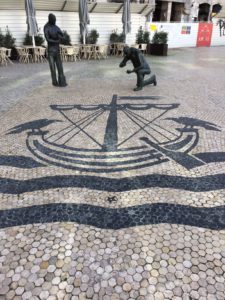 Portugal’s famous pavement originates from the nineteenth century.
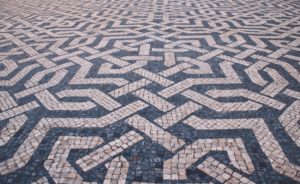
 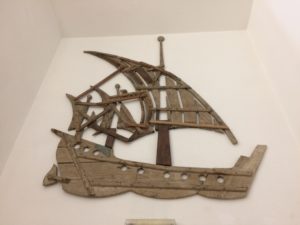 Calçada Portuguesa ( Portuguese-style pavement) is characterized by tight paving with small, irregularly shaped – usually white and black – limestones. Not only ships, animals, stars, flowers, anchors or mermaids inhabit the ground, also geometric patterns show themselves as magnificent stony carpets. Their extraordinary symmetry is impressive in this respect.
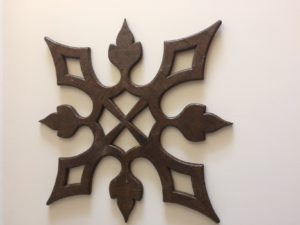 Figures in artistic sidewalks and squares – characterized by the application of stones of different color and shape – were traditionally performed with the aid of wooden molds. The base-color stone, usually white, is first laid around the mold and after removal, the darker stones are fitted inside.
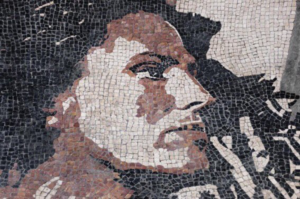 Advantages of mosaic pavement are the use of local materials, its sustainability (stones can be re-used), the ease of removal, the invisibility of restorations (when performed professionally), the efficient drainage and its cultural and touristic value.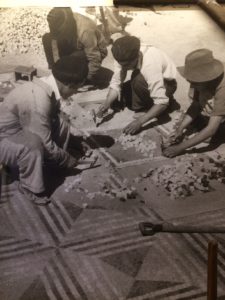
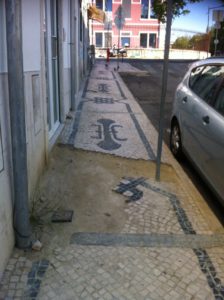
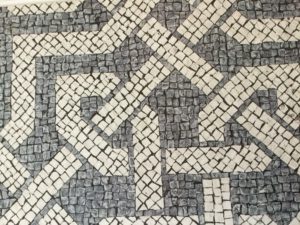 Since Portugal has been declared World’s Leading Destination and Lisbon Best City Break in 2017, I’ am sure you are dying to visit the country in order to see for yourself, whether these prestigious awards are justified.
 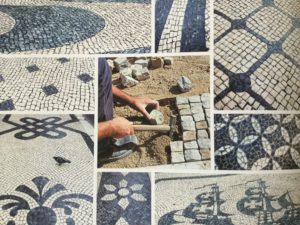 However, that hasn’t always been the case. It started as a forced task performed by prisoners in the nineteenth century. Only later it evolved into a craft and pavers (calceteiros) became recognized artisans, whose art became appreciated in such a way, that it spread to many cities and continents.
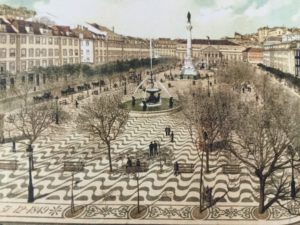 It became an immediate success and similar works were ordered, such as the paving of Lisbon’s major square Praça D. Pedro IV – popularly known as Rossio (meaning ‘wide and public space’) – that took place between 1846 and 1849.
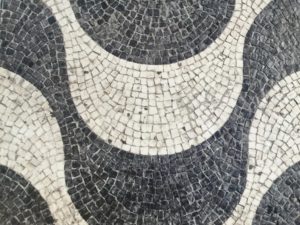 The pavement of Rossio was called ‘Wide Sea’ (Mar Largo) for depicting waves, symbolizing the encounter between the Tagus river and the Atlantic Ocean, which launched the Portuguese into the Discoveries in the 15th century. After Rossio, Lisbon adopted mosaic pavement for all its squares and sidewalks and it became the most popular pavement in historic Portuguese towns and famous worldwide.
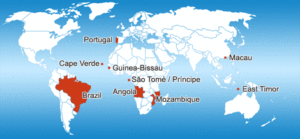 The majority of the ‘new citizens’ originate from Portuguese speaking countries such as Brazil (120.000), Cape Verde (75.000), Guinea–Bissau (35.000), and Angola (35.000). During the same period, a considerable number of Ukrainians (25.000) and Romanians (30.000) settled in the country.
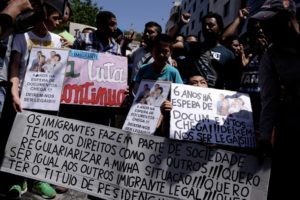 Timothy Macedo – from the NGO Solidaridade Imigrante (SOLEM) – is happy with the new law, but points out that there are more than 30.000 illegals (the vast majority living in Lisbon) and that most of them are waiting for years to be assessed by the Foreigners and Borders Service (SEF).
 It all started in July 2016 when the national football team – with captain Cristiano Ronaldo as the best male footballer in the world – won the European Football Championship for the first time in history.
 Nine months after the Football Championship, Portugal delivered another number one, by winning the Eurovision Song Contest 2017 with Salvador Sobral’s ‘Amar Pelos Dois’ [
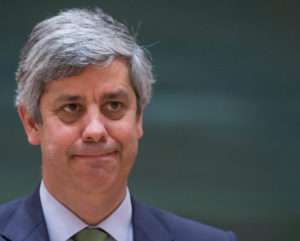 Seven months after the Eurovision Song contest the Portuguese economist and Minister of Finance – Mário Centeno – was elected as the next president of the Eurogroup, an informal but powerful gathering of 19 eurozone finance ministers. Centeno will be the first holder of the post from one of the South-European countries forced into a bailout by the euro crisis.
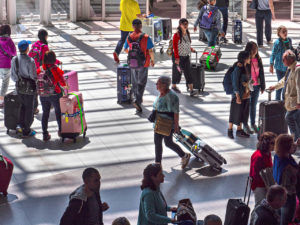 And last but not least, just before the end of this year, the World Travel Awards designated Portugal as the World’s Leading Destination in tourism. It is the first time that a European country wins this prestigious award. In addition, Lisbon won the award for best City Break in the world. The WTA’s – founded in 1993 – are internationally considered as ‘the Oscar’s of tourism’. In September Portugal had already won the award for Europe’s Leading Destination [
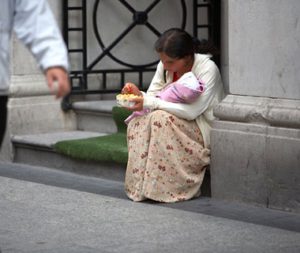 Prejudices about gypsies are very persistent. They are said to be stealing, begging, criminal and asocial.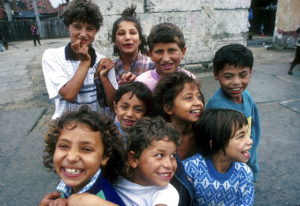
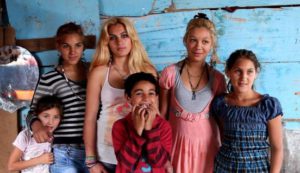 Last year Leonor Teles, a 23-year-old Portuguese film director whose father is Roma, won with her Rhoma Acans ( Gypsy Eyes) in Berlin the Golden Bear Award for the best short film.
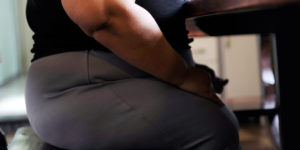 Obesity is Portugal’s biggest Public Health problem
  ‘That social inequality has an impact on health is beyond doubt.
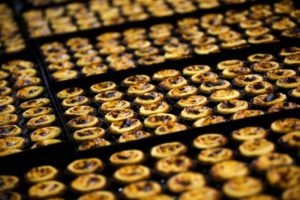 The average Portuguese eats for two, meaning almost 4000 calories per person per day!
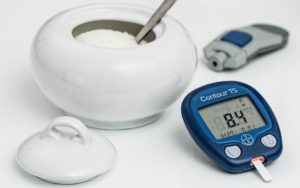 As a result of the obesity epidemic diabetes is very common and Portugal even has the highest prevalence of diabetes in Europe. One in every 7 citizens is affected and 25% of the people – who die in hospital – have diabetes. The risk to get the disease is four times higher in people, who haven’t completed primary school – a number twice as high in Portugal, than elsewhere in Europe.
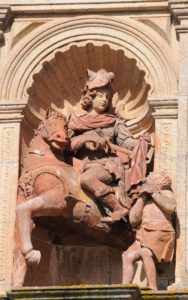 St. Martin’s Day is associated with the maturation of the year’s wine. It is a feast of Celtic roots that celebrates the end of summer and the start of winter.
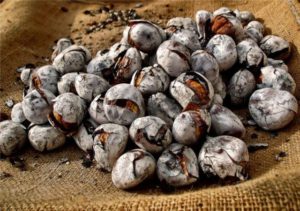 Groups of friends and families celebrate these warm days in November outdoors and used to gather around a bonfire, where they roasted chestnuts directly in the fire drank água-pé (water-foot), jeropiga, new wine and danced and sang. It was customary for girls to bring the chestnuts and for boys to bring the wine.
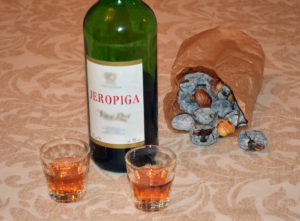 Água-pé (water-foot) is a light alcoholic beverage made by adding water to crushed grapes – after the juice is pressed out for wine – and letting it ferment for several days. Jeropiga – a sweet and strong fortified wine – is obtained in a similar way by adding brandy(aguardente) to the mash (pomace) of grapes, instead of water.
 They are all speakers on the Web Summit 2017 (November 6-9), Europe’s largest technology and digital culture conference to be held in the Altice/MEO Arena in Lisbon (
  This year the event will be even bigger. Networking and pitches (selling ideas ) are keywords, getting to know each other and looking for investment.
 It is estimated that the 2016 Summit injected 200 million euros into the national economy.