‘No one does wrong willingly or knowingly’ – Socrates, Greek philosopher
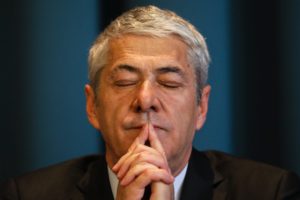 On November 21st at 10 PM, 2014 José Sócrates – ex-prime minister and former leader of the Socialist Party – was arrested at Lisbon’s airport, after flying home from Paris, under suspicion of money laundering, corruption, forgery and fiscal fraud.
He was held in preventive custody for 11 months but had to be released due to lack of evidence.
Almost 3 years later the Public Prosecutor’s Office officially closed down the final investigation – called Operation Marqués, named after the former residence of the prime minister at the Marqués de Pombal square in Lisbon – and published the results last week in a more than 4000 page’s thick report.
Except for Sócrates – prime minister between 2005 and 2011 – 9 companies and 19 individuals – amongst them important bankers, directors and public administrators – were together charged with 188 crimes.
According to the accusation, Sócrates received between 2006 and 2009 more than 24 million euros in bribes from the private enterprise Lena, the luxury tourist company Vale do Lobos and the biggest bank at that time, Banco Espírito Santo. The money is supposed to be hidden in bank accounts in Switzerland.
Carlos Santos Silva, businessman and personal friend of Sócrates, is said to be the key person in the process, acting as the mediator between the former prime minister and the involved companies.
 It’s for the first time in the history of Portugal, that a former prime minister is accused of corruption during the execution of his function as head of state. But that’s not all. Operation Marqués also incriminates ex-CEO’s from big government agencies like Portugal Telecom and the state-owned bank Caixa Geral dos Depositos.
Socrates’ lawyers declared the accusations “totally unfounded and complete nonsense.” The defense is – by law – given 50 days to react to the accusations but already has requested an extension of one year, to be able to analyze the document in detail.
The ex-prime minister himself calls the report “a fantasy, a fable without any facts or evidence” and elucidates “that the purpose of the state has never been to investigate a crime, but to harass a target.”
This week his third book ‘The evil we deplore’ was published.’
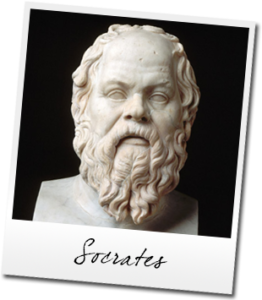
Socrates ( 469-399 BC) was a Greek philosopher and considered the father of western philosophy. He showed how argument, debate, and discussion could help men to understand difficult issues. In 399 BC he was put on trial for ‘refusing to recognize the gods of the state’, found guilty and forced to commit suicide by taking poison.
BOM FIM DE SEMANA (photo Público)
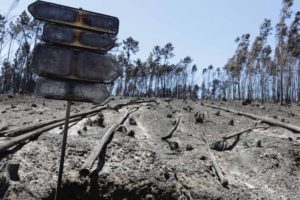 Large parts of the countries interior look spooky these days with charred trees and incinerated road signs.
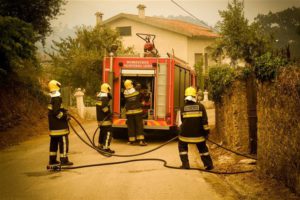 “Climate change causes many problems, but if I had to name the one that worries me most, it would be the increase in the number of wildfires – especially this summer as the fires caused many deaths in our country”, says a boy of the group of children – aged between 6 and 14 – from Leiria, seeking crowdfunding to sue 47 European countries for their failure to tackle climate change, threatening their right to life.
 “Tragedies like this are becoming the new norm because governments are failing to make the necessary cuts to their greenhouse emissions”, according to a spokesman from GLAN.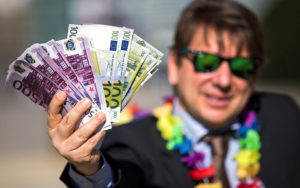
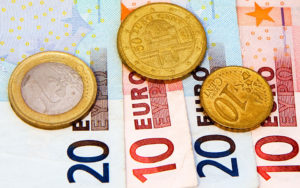 ‘To think that nowadays in our country one million people – that is 10% of the population – regular have to skip meals due to financial problems is a shame’, says Carla Lopes, a nutritionist at the Public Health Institute of the University of Porto.
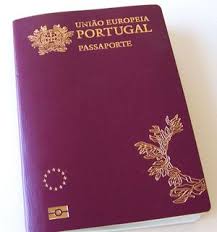 For wealthy people, there is a far much easier way. Portugal’s ‘golden residence permit’ – visto gold – requires an investment of 500,000 euros in property in exchange for permanent residency and visa-free travel through Europe’s Schengen area.
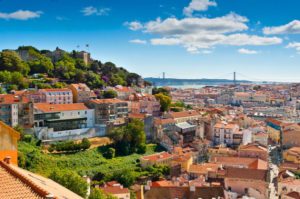 One of them is Otávio Azevedo, former president of Brazil’s second-largest construction company, Andrade Gutierrez. He received an 18-year sentence last year, after admitting a string of corruption offenses. Two years before his arrest he bought a € 1.4 million property in Lisbon and subsequently applied for a golden visa in 2014.
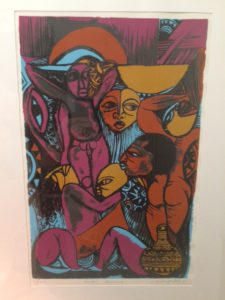 Mamadou Ba is born in Senegal and has the Portuguese nationality. He is graduated, has a steady job at the Parliament, and speaks with a slight African accent. When he is calling for an apartment in Lisbon’s Parque das Nações neighborhood, he gets an appointment 2 days later. Although the tenant promises him to send an SMS with additional information, he never does. If shortly thereafter a journalist of the newspaper Público– with a Portuguese name and a Lisbon accent – calls the same tenant, he immediately gets the necessary information by phone and an appointment for the next day. In only two out of five phone calls, Mamadou and the journalist were treated the same way.
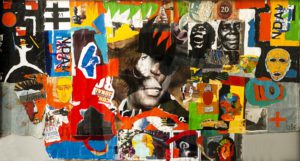 ‘It isn’t true that social class eliminates racism.
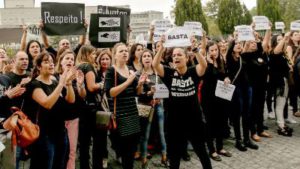 ‘We are still counting, but everything indicates, that an overwhelming majority – over 90% – of the nurses are supporting this action’, says José de Azevedo, leader of the SEP on the first day of the strike.
 The number of qualified nurses in Portugal is – with 1 in 200 inhabitants – one of the lowest in the EU.
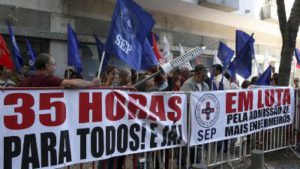 Apart from low wages, nurses also criticize the lack of career perspectives – that was canceled as well in 2009 – and demand the reintroduction of specializations, together with a gradual wage increase of 2400 euros per month over 3 years.
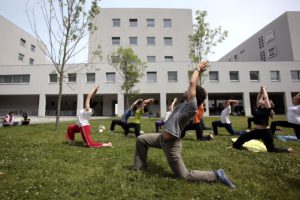 2 in 3 Portuguese are endangering their health by not taking enough exercise, leading to serious health conditions, like heart disease, diabetes, cancers (breast and bowel), depression and dementia.
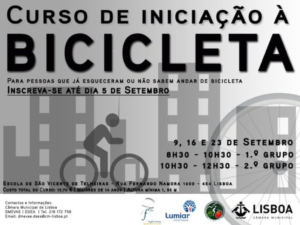 Cycling is a good alternative to using the car. It not only reduces traffic congestion but also benefits the environment and health. Regular cycling ( 45 km a week) cuts the risk of death from any cause by 40% and the incidence of heart disease and cancer by 45%.
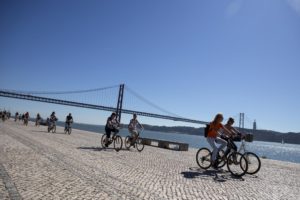 This number is to be extended to 1400 bikes – 950 electric ones to cope with the hilly parts –being installed in the flatter parts of Lisbon – the Plateau area, the touristic Baixa and along the waterfront of the Tagus river.
 These friends – that now had become creditors – demanded strict measures, that were enthusiastically implemented by the country’s then conservative government. It started raining austerities for many years and the people suffered.
 And it worked. Two years after taking power the government is showing an economic growth of 2.5% – the strongest since the beginning of the recession – and a reduction of the deficit by half, lower than ever. Meanwhile, foreign investment jumped 13%, unemployment dropped below 10% and 17 billion (65%) of the loan from the IMF is repaid.
 ‘These numbers are shocking’, says Alípio Ribeiro, an attorney from the Criminal Investigation Department and confirm what he already thought: ‘there is a legal system for whites and a legal system for blacks’.
 Celso Manata, head of DGPJ, however, rejects the idea that the legal system is discriminatory. He admits that there is an over-representation of blacks in Portuguese prisons, but believes that ‘this is caused by the poor socio-economic circumstances of black people, who therefore are more likely to commit a crime’.
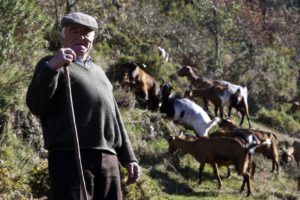 The ‘typical’ Portuguese doesn’t exist in a country that has been occupied by a great number of civilizations – Phoenicians, Romans, Visigoths, Celts, Swabians, and Arabs.
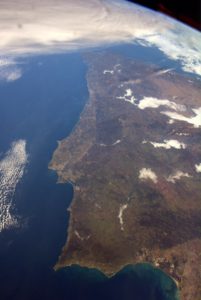 The national territory can – according to the Ministry of Environment – roughly be divided into: