
Quando oiei a terra ardendo When I saw the burned land
Qua fogueira de São João Like the ‘bonfire of Saint John’
Eu perguntei a Deus do céu, uai I asked the Lord in heaven, ai
Por que tamanha judiação? Do I deserve this suffering?
Que braseiro, que fornaia What a heat, what a furnace
Nem um pê de prantação Not even a single plant survives
Por farta d’água, perdi meu gado For lack of water, I lost my cattle
moreu de sede meu alazão My best horse died of thirst
https://youtu.be/DNBCw7r0mwU [ Asa Branca, Luiz Gonzaga, 1947 ]
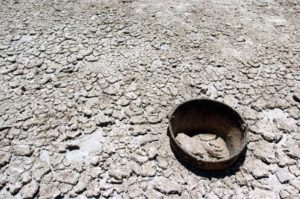 July turned out to be one of the driest months in the past 17 years. Water levels in dams and basins have dropped substantially.
Last week the Meteorological Institute classified 99% of the land as dry – 80% even as very or extremely dry – especially the Southern and Eastern part of the country.
So far government’s response has been limited with the creation of an ‘Interdepartmental Committee on Drought Monitoring.’
Experts, like João Deniz from the National Confederation of Agriculture, are concerned. ‘The situation is becoming worse every day. The government is far too optimistic. They are no farmers and should be more worried.’
He remembers the severe drought in 2005, when – South of the river Tagus – more than 120 cattle died every day due to lack of rain. Cereal production fell by 60%, wine with 30% and the production of honey was almost eliminated.
‘The drought of 2005 hasn’t learned us a lesson’, says Nelson Geada, president of the Portuguese Association of Water Distribution and Drainage. ‘Things tend to get worse due to climate change. One-third of the country already faces degradation and aridity of soils, especially the interior of the Algarve and the Alentejo. It is the time that the country starts preparing itself for the future, instead of praying for rain, like people used to do.’
Quercus, an environmental NGO is also critical on government policy. ‘Drought not only compromises agriculture and livestock but lack of vegetation also leads to an increase of CO₂ and further global warming, wildfires, poverty, and emigration.
 Although water is scarce, wine is not!
Portugal has the highest wine consumption in the world with a mean intake of 54 liters per person per year ( followed closely by France with 52 liters ).
Wine and not water has to keep Portugal going this summer. Not dry wine of course.
Bom fim de semana (photos Público/SAPO)
 In the meantime, he has been staying in Portugal for over a year, and despite the fact that pre-selection took place in Greece, he’s still waiting for his residence permit.
 Moreover, they do not find the conditions they hoped for and are distributed across the countryside, while most of them have an urban background. In addition, asylum procedures are very slow, there are problems with the recognition of diplomas and there is a lack of Arabic-speaking interpreters.
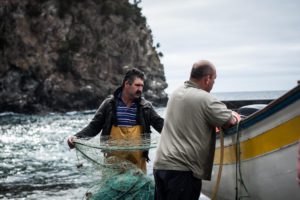
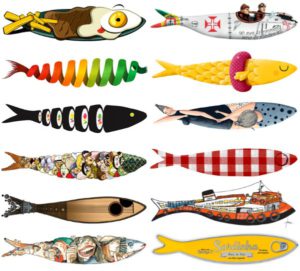 ‘Dat zal niet alleen een hele generatie vissers werkeloos maken maar ook de Portugese cultuur en eetgewoonten ingrijpend veranderen.
 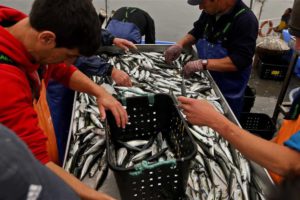 Verleden jaar werd door de Portugese vissersvloot – volgens gegevens van het Nationaal Bureau voor de Statistiek – bijna 200.000 ton vis uit zee gehaald, waarvan 14.000 ton sardines.
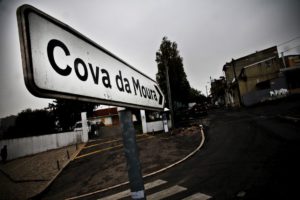 Het Openbaar Ministerie heeft – na 2 jaar onderzoek – 18 politieagenten beschuldigd van raciaal geweld, ernstig letsel, marteling, valsheid in geschrifte en ontvoering van 6 jonge Afro-Portugezen in Cova de Moura, een van de oudste en grootste achterstandswijken van Lissabon, met 7000 inwoners, de meeste afkomstig uit Kaapverdië.
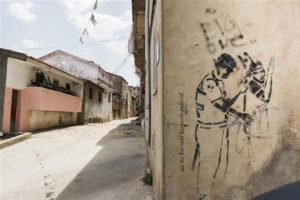 Als ze – na voorgeleid te zijn aan de onderzoeksrechter in Sintra – bij gebrek aan bewijs vrij komen, doen ze aangifte van marteling en racistisch geweld. Intern onderzoek bij de politie levert daarvoor onvoldoende aanwijzingen op en twee agenten worden licht gestraft – een wordt overgeplaatst en de ander 6 maanden geschorst. De overige blijven gewoon dienst doen in de wijk.
 ‘Institutioneel racisme wordt in stand gehouden door een van de grootste leugens die we onszelf voorhouden, namelijk dat Portugal in het – koloniale – verleden amper racistisch geweest is’, zegt Joana Mortágua, parlementslid van het Links Blok. ‘Dat belemmert integratie.’ [
 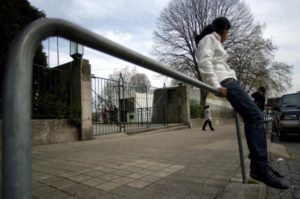 Kon ze maar een manier bedenken om niet meer naar die rotschool te hoeven.
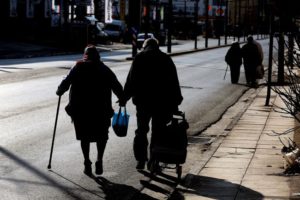 ‘Er zijn bejaarden in Portugal, die absoluut pervers behandeld worden’, zegt José de Faria Costa, ombudsman bij de gratis telefonische hulplijn voor ouderen ( Linha do Idoso). ‘Sommige kinderen gaan zo ver, dat ze – tegen de tijd dat het zomer wordt – stoppen met het geven van medicijnen aan hun ouders, waardoor die met spoed moeten worden opgenomen. Dan kunnen de kinderen rustig op vakantie’.
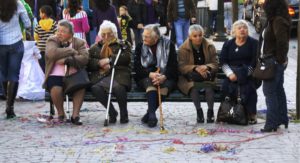 Een tweede ontwikkeling is de toegenomen levensverwachting.
 Niemand minder dan de 82-jarige Sophia Loren doopte begin deze maand in Le Havre het – volgens de eigenaar – 8e wereldwonder.
 Het merendeel van de hoogopgeleide – meest universitair geschoolde – jongeren, die de afgelopen 5 jaar geëmigreerd zijn, hebben nog geen
 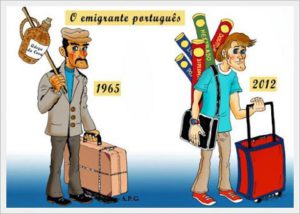 Door de wereldwijde crisis en de forse bezuinigingen zijn sinds 2011 – toen de economische crisis op z’n hoogtepunt was – ieder jaar meer dan 100.000Portugezen naar het buitenland vertrokken. In tegenstelling tot de jaren 60 zijn het nu vooral jonge en gekwalificeerde mensen die emigreren en is met name Engeland zeer gewild bij artsen en verpleegkundigen.