
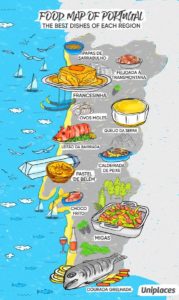
Traditional food is based on fish, seafood or pork with lots of olive oil.
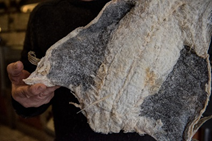
Bacalhau is the undisputed National dish, especially on Christmas Eve when 4 to 5 thousand tons of Norwegian cod is devoured.
Cod became prominent during the Discovery Era because it could be stored for longer periods. You can see and smell the large hard chunks in shops, where a small saw is often used to cut the fish. Salted cod is primarily soaked for at least 24 hours in water before cooking, grilling, frying, or braising
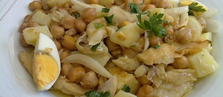
Popular dishes are cod baked with cream (bacalhau com natas), stir-fried with shredded potato, eggs, and onions (bacalhau à brás) and cod with chicken peas (meia-desfeita).
Meia-desfeita (‘half-undone’) stems from the times when one used to order only half the dish.
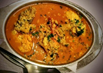
Arroz de marisco consists of rice, monkfish, and seafood like prawns, mussels, squid, or clams and is usually seasoned with fresh herbs and white wine. Unlike the Spanish paella, it is not fried and often described as a thick rice stew.
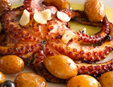
Polvo à Lagareiro is made in the style of Lagareiro. In this case, the octopus is boiled, then cut into pieces, grilled, and brushed with extra virgin olive oil. The dish is dressed with a combination of garlic, coriander, lemon juice, and salt, served with small roasted potatoes with their skin intact and lots of olive oil.
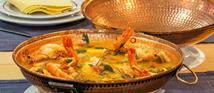
Cataplana de marisco refers to a popular fish- or seafood dish sharing the same name as the clam-shaped copper pan in which it is prepared. The Moors introduced the dish which usually includes white fish, shellfish, red peppers, onions, and a bit of chili.
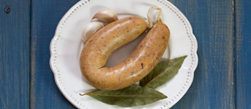
Alheira is a smoked sausage typically made with various types of meat, bread, garlic, olive oil, and paprika. It is believed to be invented during the Inquisition by Portuguese Jews. To disguise as Christians they started producing pork-like sausages but would replace the traditional pork with poultry and game.
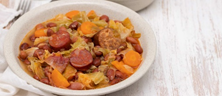
Feijoada à portuguesa is a hearty bean stew originating in the north of the country before it was introduced in Brazil, where it is considered the National dish. It is made with red kidney or white beans and usually includes pork (ears, foot), morcela (blood sausage), or chouriço.
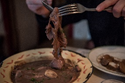
Iscas com elas are thin strips of cow’s liver, sautéed in wine and garlic. They’re served with boiled potatoes (referred to as elas – meaning them). The dish was brought to the country by the Galicians, who arrived in the 18th century to work in, and later own restaurants and cafés.
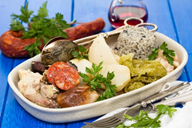
Cozido à portuguesa is a rustic stew for meat lovers. It usually consists of beef, pork, chicken, and smoked sausages, such as morcela, chouriço, or alheira. It might also contain other bits of animal-like pig’s ear or foot – and potatoes, cabbage, or carrots. All the ingredients are cooked together in a single pot with different items added at different times.
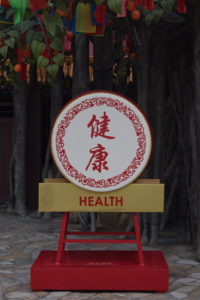
Boas Festas Stay Healthy (pic tasteatlas/roads&kingdoms/sapo)






 Portugal prepares to vote in Sunday’s general election.
 For the ruling Socialist party (PS) climate change adaptation is also needed. But that isn’t enough. The party defines concrete targets for 2030 and others for 2050, such as carbon neutrality. The PS wishes to reinforce the capacity of wind farms and – faced with extreme weather – extend forecasting and warning systems. Empowering farmers ‘to adopt good practices’ is also called for.
 The Left Bloc (BE) is in favour of a Climate Law, an Energy Base Law and a Ministry of Climate Action. The far-left party advocates the end of fossil fuel car production by 2025 and coal-fired power generation by 2023, in the meantime accelerating solar production. It also intends to ban cars from city centres and strives for free public transport, favouring investment in ‘rail mode’.
 The millennium Animal and Nature party (PAN) – founded in 2009 – wants vegetarian meals at state-sponsored events, prevention of any exploitation of hydrocarbons and the closure of all coal plants by 2023. Furthermore financial benefits for cycling to work, measures to reduce car traffic, restrictions on night air traffic and the suspension of the construction of a new airport.
 However, the level of commitment of all six major parties is far too low, argues a group of independent citizens,
  The polls suggest António Costa’s Socialist party will win but fall short of an absolute majority in parliament.
 Five years after the peak of its economic crisis, Portugal’s future looks bright. There is more confidence, more consumption and there are more young people in college.
 The country’s workforce is relatively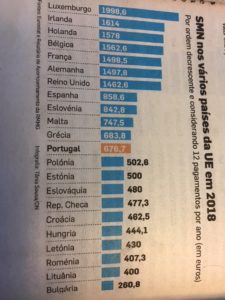

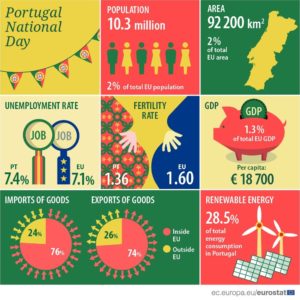 If you are what you eat (drink, smoke) or love (males, females, yourself), then countries certainly aren’t the same. There are after all innumerous appetites and lifestyles. For example, health club membership is twice as high in Spain and three times higher in Denmark.
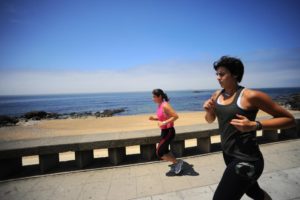 Portuguese people take 4744 steps a day, far less than the Chinese in Hong Kong or even their Spanish neighbours. Two-thirds are not physically
  Portuguese adore cars – one in every two owns one – and use them every day. For everything: commuting, shopping, and outings. Unfortunately, these motorists hardly ever use public transport and are keen to make
  Anti-smoking campaigns aren’t successful at all and overall smoking hasn’t declined in 30 years.
 Apparently not. Portuguese people love their culture and are– besides Fado, Football, and Fatima – fond of grilled sardines, Pessoa, Saramago, sunny weather and popular saints. They also
  The most stunning, however – at least according to the Observer – are the eyes of their men. Wherever you are in the world, you should look at their
  Portuguese drink the most wine worldwide, on average 1 litre per person per week.
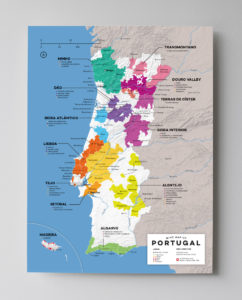 Portugal’s wine culture developed in relative isolation for more than 2000 years. Many grape varieties – there are over 250 indigenous ones – do not grow elsewhere in the world.
 ‘To state that wine causes cancer is simply untrue’, says Georg Sandeman, chairman of the Portuguese Wine and Spirits Association (ACIBEV). ‘Northern countries want to impose their culture on us. In the north of Europe, people use to drink a lot in short periods of time (‘binge drinking’) and often without food. Here, wine is part of our culture, our gastronomy. Of course, excessive use should be reduced but not moderate consumption.’
 The best advice, therefore, is to stick to the American Cancer Society’s
  Patients have to wait 3 years to see a urologist in Vila Real or an ENT specialist in Leiria and 2 years to obtain an appointment with a cardiologist in Guarda. These extremes not only occur in the countryside, as the waiting list for a neurological consultation at Amadora Sintra – one of the biggest state hospitals in the country – exceeds more than a year.
 The average waiting period for (non-acute) specialist care in Portugal is 4 months, varying from 6 months for an ophthalmologist to 6 weeks for an obstetrician. Patients who have to wait for more than five months have – by law – the right to be treated in the private sector. A costly buffer as the SNS, respectively the taxpayer must pay the bill.
 The excessive waiting lists are – according to the independent trade union of doctors Sindicato Independente dos Médicos – mainly the result of the fact that specialists in state hospitals have to spend too much – almost half – of their time to emergencies. The majority of the specialists working in the SNS is therefore unsatisfied. Many want to abandon the service and either go into private practice or leave the country, where working conditions are better and the pay higher.
 ‘Wages are indeed low, excess hours abundant and career prospects nil’, explains Maria Ferreira of the Public Health Department of the University of Porto, who conducted an investigation under 15.000 doctors in northern Portugal. ‘Half of the recently qualified doctors is thinking of leaving the country after finishing their specialization and over 1200 doctors have already left in the past 3 years.’
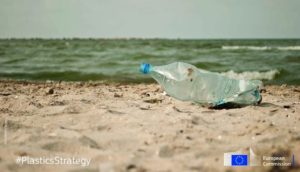
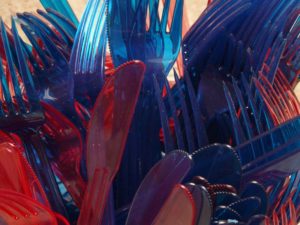 A draft legislation thereupon was submitted in July 2017 and discussed in Parliament early this year. Heloísa Apolónia – MP of the Ecological and Green Party (PEV) – explains ‘our proposal is to ban the use of plastic disposables in restaurants and bars and to look for biodegradable substitutes within 3 years.’
 António Fonseca, the president of the Association of Bars in the Historic Center of Porto (ABZHP) – that encourages the legalization of the use of alcohol in public places – believes that the plans are irresponsible in the light of the danger glassware can cause in nightlife.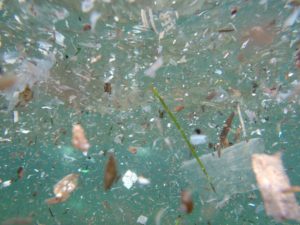

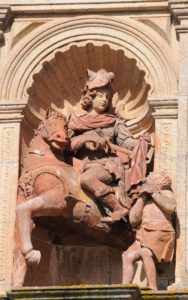 St. Martin’s Day is associated with the maturation of the year’s wine. It is a feast of Celtic roots that celebrates the end of summer and the start of winter.
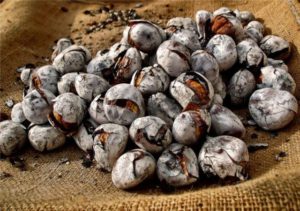 Groups of friends and families celebrate these warm days in November outdoors and used to gather around a bonfire, where they roasted chestnuts directly in the fire drank água-pé (water-foot), jeropiga, new wine and danced and sang. It was customary for girls to bring the chestnuts and for boys to bring the wine.
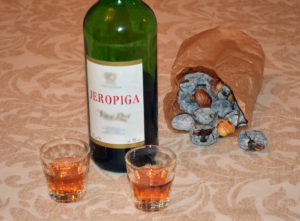 Água-pé (water-foot) is a light alcoholic beverage made by adding water to crushed grapes – after the juice is pressed out for wine – and letting it ferment for several days. Jeropiga – a sweet and strong fortified wine – is obtained in a similar way by adding brandy(aguardente) to the mash (pomace) of grapes, instead of water.