
Tag Archive for: crisis

Worldwide there is a ‘silent majority’ in favour of action on climate change
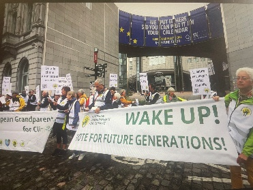
The world is on fire and climate action very popular. So why is it not realised?
Research shows that the vast majority of people around the world want more to be done to fight the climate crisis but mistakenly assume their peers do not. Making concerned people aware their views are far from alone could unlock the change so urgently needed.

The data comes from a global survey – published in the journal Nature Climate Change – that interviewed people across 125 countries and found that 89% were of the opinion that their national government ‘should do more to fight global warming.’ People in China – the world’s biggest polluter – were among the most concerned.

It also asked people if they would ‘contribute 1% of their household income to fight global warming’. In almost all countries, people believed only a minority of their fellow citizens would be willing to contribute. In reality the opposite was true: more than 50% of citizens were willing to give 1% of their income, including Portugal, where eight out of ten Portugues prioritise the environment above the economy.

Further analysis of the data for the British newspaper The Guardian showed that public backing for climate action was as strong among the G20 member countries as in the rest of the world. These states, including the US, China, Saudi Arabia, the UK and Australia, are responsible for three-quarters of the global carbon emissions.

‘Worrying about climate change is something people are doing largely in privacy of their own minds – we  are locked in a self-fulfilling ‘spiral of silence’, states prof Cynthia Frantz, at Oberlin College in the US.
A decades-long campaign of misinformation by the fossil fuel industry is a key reason the climate majority has been suppressed.

To unite the ‘silent majority’ and allow the collective voice to become more audible in the political arena, we should focus the climate debate more on intergenerational issues – such as legacy passed from grandparents to grandchildren – and less on individual contributions, says Anabela Carvalho, professor in the Department of Communication Sciences at the University of Minho.

But youngsters can also do their bit as shown in Sweden, where participant-led young planetary stewards perform paid summer jobs ‘inspiring hope for their future.’ Ideas come from the young people themselves and comprise projects such creating habitats (frog ponds) or a new stretch of hiking trail, building bird boxes and insect hotels, and running community workshops in local libraries.

‘I have a pretty pessimistic world view’, 18-year-ola Oona Verveld – one of the stewards – explains. ‘But through this initiative I feel I can contribute in ways that will have an impact. I don’t just watch climate change happening, I’m somehow active in improving it later on.’

Enjoy your week         Aproveite a semana                (pic David Hockney, painter, † 2026)

‘World’s 1.5C climate target ‘deader than a doornail’ – the Guardian

The internationally 2015 Paris agreement to keep the world’s temperature below 1.5C in 2050 will not be achieved – with 2024 being the year above this threshold – despite the current gathering of world’s decision-makers at the United Nations COP29 summit in Baku, Azerbajan.   

In 2030, the reduction in greenhouse gas emissions from the EU is expected to reach 49% – according to the EEA (European Environment Agency) – still far from its target of 55%. However, even this goal would be insufficient to meet the Paris Agreement and shows that much more ambition is needed.

Although Portugal is trying its best – from 2005 to 2022 it reduced 34% of its emissions –  the country definitely doesn’t belong to the frontrunners in the EU (like Sweden) but is at the average of all EU countries in terms of emissions.

There are sectors that are being difficult to decarbonize. ‘Transport, Agriculture and Waste are still far from reaching the sectorial goals defined for 2030’, says the State of the Environment Report (REA) released by the Portuguese Environment Agency last month.  

With the exception of the railways, emissions from all other means of transport increased. In particular, the evolution of sectors such as aviation and the oil industry are cause of concern. The major emissions zones are all close to the sea, but two stand out, the Galp refinery in Sines and the Humberto Delgado airport in Lisbon.

The international airport is the most polluting with 3.5 million tons and emissions continue to increase, with special thanks to private aviation.

Portugal is on the list of 20 countries with the most jet planes for the private market. The country is in 14th place, with an equivalent of 1.5 jets per 100,000 residents. Behind the USA (5.4/100,000) and Switzerland (3.7/100,000) but ahead of the UK (0.8/100,000) and Germany (0.7/100,000). The ‘golden visasdefinitely explain its ranking on the list.

Although Galp’s refinery in Sines recorded a decline last year, it will still emit cerca 2.2 million tons this year. ‘Galp’s intention to review its decarbonization targets – due to the discovery of oil in Namibia – and the slower execution of renewable projects is very worrying, the environmental movement ZERO said in a statement.

The port of Sines appears in 3rd place with 1.2 million tons and an upward trend since 2021. Carnes Landeiro in Barcelos, the Ribatejo Thermoelectric Power Plant in Carregado and the Cimpor’s Cement factory in Souselas are in 4th, 5th and 6th place, respectively.

With a centre-right government in power since the beginning of this year, environmentalists fear the focus on technology and economy could undermine the climate transition. They are calling on the government to uphold the country’s 2045 goal for reaching carbon neutrality, rather than delaying it until 2050 as far-right groups are pushing for.  


Enjoy your week         Aproveite a semana               (pic Público/Sapo)