Tag Archive for: sustainability

Health Services disease: easy diagnosis, difficult treatment

Is the National Health Service still sustainable?
60% of private deliveries are by Caesarean section, twice as many as in the SNS.
43 public hospitals on the brink of collapse.
More than two thousand family doctors are out of the SNS.
Health Centres lack almost everything.
Public hospitals suffer from ‘persistent underfunding.’

Centre-right government doesn’t want doctors to be hired by private agencies.
More than half of SNS doctors also work in the private sector.
The vast majority of foreign doctors are working in the private sector.
Private hospitals break records with over 10 million consultations per year.

Mother loses baby after visiting five hospitals.
Infant mortality increasing in Portugal.
Infant mortality peaking since 2019. Unguarded pregnancies may explain.
Why do SNS professionals run away?

2,700 doctors leave Portugal for abroad.
In Portugal most people die in hospital, relatively few at home.
Portuguese medical specialists are among the lowest paid in Europe.
Health workers are depressed.

Number of nursing graduates below the EU average.
Order of Nurses warns of the ‘escape’ of nursing professionals from Portugal.
No progress in nursing careers.
Almost 1 million waiting for hospital appointments.
Over 7500 victims of cancer await critical surgeries.

Diagnosing the evils of the SNS (National Health Service) in Portugal is easy because the holes are in plain sight. The SNS used to be outstanding when created almost fifty years ago. Although it still maintains some excellent services, it has been degrading for not having adapted to a different society, states professor António Sarmento in the newspaper Expresso.

The price of health care has increased exponentially as a result of medical progress with technical and pharmacological innovations, many of which without a clearly demonstrated cost-benefit advantage.

There is an increasing stimulus to consumption in health care whose main focus is profit, as if health were a commercial activity. To enhance this demand for health care are the exaggerated expectations in the possibilities of Medicine.

It is unacceptable that private clinics try to condition the salary of doctors to the number of tests requested. There are even clinics announcing the offer of free radiographs as a gift for procedures performed.  

But are public hospitals a paradise of ethics and virtue? Of course not. It is enough to look carefully at the perversion of some programs of the so-called additional production in some hospitals or at the administrative pressure that threatens good medical practice and demotivates the professionals.

What will be the solution? There seems to be only one way: a structural reform of the SNS, facing it as an imperative of national interest. There are general principles underlying any global reform of the health system

Health cannot be a business case like selling cars, apartments or commodities. Its merely commercial essence cannot be accepted, reducing health to a consumer good and the patient to a customer

There is only one Medicine: the one centred on people!

Promotion of health literacy should be based on Science, including universal concepts of dignity, compassion and beneficence, not forgetting respect of those who take care of others.

Cooperation with Public Health Services of the EU member states is warranted for the solution of problems that are common to all.

It is high time the country finds financing mechanisms that allow sustainable, accessible and equitable health for all.

Enjoy your week          Aproveite a sua semana               (Pic Público/PtRes)


‘Those who care about their grandchildren plant cork oak trees – Portuguese saying

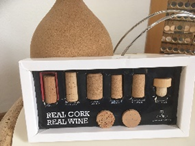
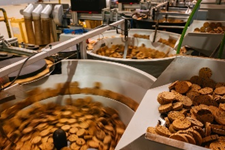
Cork has been around for thousands of years in the western Mediterranean. Egyptians, Greeks, and Romans used it for fishing gear, sandals, and sealing of jugs, jars, and barrels. As glass bottles gained popularity in the 18th century, cork became the preferred wine stopper because it is durable, waterproof, and pliable.

Nowadays cork is experiencing a revival as more industries are looking for sustainable alternatives to plastic and other materials derived from fossil fuels. The bark is used for flooring, furniture, clothes, footwear, bags, and hats and as an effective thermal and acoustic insulation in buildings and electric car batteries. It is resistant to water and oil and very durable, remaining virtually unchanged for many years.

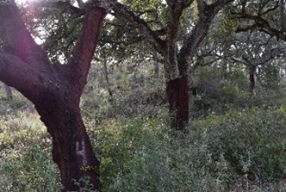
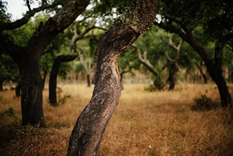
The slow-growing cork oak tree – scientifically known as Quercus suber – is the source of this eco-friendly material. Portugal has one of the largest cork oak forests in the world, covering vast areas in the poor soil of the dry Alentejo province. The country is the world’s largest producer and cork its most exported product, reaching over 1 billion euros and being sold in over 130 countries.

But cork is more than a sustainable and fashionable material. In addition to providing employment, the forests absorb CO2. Unlike most trees, evergreen cork oaks are never cut down as they are protected by law. This means that their carbon storage capacity continues through the 200 years or more they live.

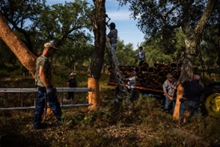
The bark can only be harvested between May and August by experienced workers who carefully strip the outer layer without damaging the trunk. The cork oak is unique in regenerating its bark. Once it is removed, the last number of that year is applied with white paint on the exposed trunk – a 4 means bark was harvested in 2014 – after which the tree will be ready for another harvest nine years later.

Although cork forests can help mitigate global warming and the thick bark protects the tree from fire, they are increasingly at risk as wildfires become more frequent and more intense. Especially in the first two years after the cork is extracted, the trees are vulnerable to wildfires as the trunk is without protection.

Recycled cork can also be used to make other products. More than 300.000 corks were needed to make a mosaic of Nobel laureate José Saramago, which was credited to the Guinness Book of Records in 2014. Meanwhile Green Cork – a recycling program started by the environmental organization Quercus – has recycled more than 100 million cork stoppers since 2009.

Enjoy the week                     Aproveite a semana               (pic WashPost)