Recognition of the Iberian rabbit as a ‘distinct species’ prevents its extinction

International research from Portugal and the UK say the European rabbit is in fact two species split two million years ago, the Iberian one now being in decline.
Until recently, scientists took it for granted that only a single species of rabbit lived on the Iberian Peninsula.
A study – ‘When taxonomy lags behind evolution’- published in Biological Conservation now calls that into question.

According to the Research Centre in Biodiversity and Genetic Resources (CIBIO) of the University of Porto, it is in fact a case of two species with separate evolutionary histories: the Iberian rabbit (Oryctolagus algirus) and European rabbit (Oryctolagus cuniculus).
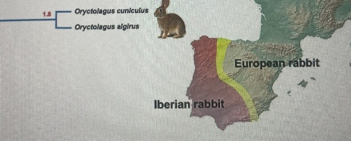
The former occurs naturally in Portugal and south-western Spain, while the latter dominates the eastern part of the Peninsula and is the source of the populations introduced in Europe, Oceania and the Americas, where it often behaves as an invasive species.

The two animals diverged roughly two million years ago, when they became isolated in different refuges during the Quaternary glaciation: one in the Ebro Valley, the other in the Gulf of Cádiz. Since then they have barely interbred to any significant extent, despite looking very similar at first glance.

The differences are not confined to genetics. There are profound biological differences. The Iberian rabbit is smaller, with darker fur, smaller litters with lower population densities and earlier sexual maturity than the European species. They also differ in their gut microbiome and the parasites they harbour.
The authors point to precedents: giraffes long grouped as a single species until genomics revealed that there are in fact four.

While the European rabbit populations remain stable – or are even increasing to the point of causing agricultural damage – the Iberian rabbit is in marked decline in Portugal and western Spain and meets the criteria ’endangered species.’ The problem is not just statistic. Game restocking usually releases European rabbits – which are more abundant and prolific – into areas where only the Iberian species previously lived. That can accelerate its replacement through competition.

The issue goes well beyond the animal itself.
Rabbits are prey for the Iberian lynx and the Spanish imperial eagle, so its conservation status shapes that of much Mediterranean wildlife.

‘It is no longer possible to manage rabbit populations in the Iberian Peninsula as if they constituted a single biological entity. Recognising these two species is fundamental to developing appropriate and tailor-made conservation measures and preventing a single evolutionary lineage from continuing its decline’, emphasis Nuno Ferrand, director at CIBIO and one of the authors of the study.
Enjoy your week Aproveite a semana (pic Wiki)