Tag Archive for: protection

Portugal fined for environmental failings
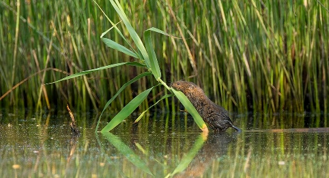
Portugal has been fined 10 million euro’s by the Court of Justice of the European Union (CJEU) for failing to comply with the Habitats Directive (adopted in 1992), that aims to protect over a thousand species, including mammals, reptiles, amphibians, fish and plants. It also has been ordered to pay a compulsory fine of 41,250 euro’s a day until it complies with a previous court order from 2019.

The daily fine corresponds to a penalty of 750 euros for each of the sites, that the court stated had ‘still not be been protected’ despite the Portuguese Government having been ordered seven years ago to comply with EU laws. The fine will be reduced once a site is brought into compliance.

The court said in a statement that ‘these are particularly serious breaches of EU environmental law, in which Portugal has persisted’, whereas ‘its territory hosts rich biodiversity – including 99 habitat types and 335 species covered by the Habitats Directive .´

The European Commission has battled for years to try to force Portugal to conserve and protect habitats and species in areas that should have been designated for conservation under the EU Habitats Directive, that established Natura 2000– the world’s largest ecological network .
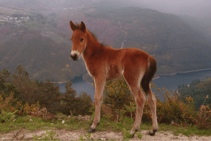

Under EU law, sites of community importance include Peneda-Geres – Portugal’s only National park – the natural park Lithoral Norte and the Minho and Lima rivers. Also included are Valongo, home to rare fern species and an important site for the golden-striped salamander, the Serra D’Arga mountain and Corno do Bico, a protected landscape.

The Government was ordered by court to comply with the EU Habitats Directive  in a case brought by the European Commission in 2019 after allegations it had failed to designate sites of community importance as special areas of conservation (SAC).

Under the directive, countries had to designate sac sites that needed protection within six years, with accompanying measures to protect rare habitats and species. In 2019 the court found that Portugal had failed to fulfil its obligations to designate 61 areas under the Atlantic and Mediterranean biodiversity classification.

Although a spokesman of the government declared that ‘’very little remains to be done for the work to be completed and to fully comply with the obligations arising from the Habitats Directive’, environmental NGO ZERO (Association for a Sustainable Terrestrial System) criticised the government for not taking the implementation of environmental projects seriously.

Enjoy your week          Aproveite a semana               (pic Sapo/Ptres)


‘Unfortunately nobody can predict the next earthquake’

On Monday morning August 26 at 05.11 the country was startled by an earthquake 58 kilometres west of Sines, in the district of Setúbal with a magnitude of 5.3 on the Richer scale. No personal or material damage was reported, although there were many phone calls from concerned people seeking information.

According to the National Emergency and Civil Protection Authority (ANEPC) in Oeiras, the earthquake had its epicentre at sea but no tsunami warning was given since the magnitude was less than 6.1.
The tremor was felt in several parts of the country but with greater intensity in Setubal and Lisbon.

‘Although this earthquake can be considered as moderate, one shouldn’t worry too much as the southern part of the country has always been seismic active’, says Joao Duarte, seismologist at IPMA, the Portuguese Institute of the Sea and Atmosphere. But it definitely serves as a wake-up call to invest in risk reduction.

It has to do with two tectonic plates pushing against each other. The African plate moves northwest and lifts the Eurasian plate, which is moving to the east –  along the so-called Azores-Gibraltar fracture.
The earthquake has been classified as the biggest felt in Lisbon since 1969, which had a force of 7.9 and its epicentre 250 km away from Lisbon. That time 13 people died.  

The by far biggest terramoto was in 1755, with a magnitude of 9 on the Richter scale. It developed apocalyptic proportions and completely whipped out the lower part of Lisbon. In memory of that country’s main natural disaster, an Earthquake Museum (Museu do Terramoto) was recently opened in Belem.  

The mayor of Lisbon, Carlos Moedas, declared that ‘the City Council  has been ‘seismically’ assessing more than 1500 municipal buildings over the last two years and that only 10% of the buildings need anti-seismic reinforcement.’

However, almost 70% of Lisbon’s buildings were built before the seismic protection law in 1983, making the capital the second city with the highest seismic risk after Istanbul.

The weekly newspaper Expresso published, that 195,000 Lisbon residents live in homes that were not built to earthquake standards.
Mafra, says the newspaper, is the only municipality on the mainland that has a special ‘escape plan’ for the population in case of such a natural disaster.’

One can only hope not to be surprised by bigger earthquakes than the one that woke many of us up on that early morning of August 26.

Enjoy your week          Approveite a semana      (pic Público/Sapo)