
‘Portugal is still a backward country’ – Elisa Ferreira (EU commissioner)
Portugal is about twice as big as the Netherlands and has 10 million inhabitants, of which 2 million live abroad. Last week – on the 5th of October – Republic Day was celebrated, memorizing the overthrow of the monarchy in 1910.
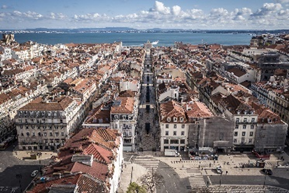
Since the Carnation Revolution in 1974, urbanization has increased at the expense of the countryside, and the coastal region has become more densely populated, younger, and richer. The two metropolitan areas of Lisbon (at the Tagus river) and Porto (at the river Douro) – cover 5% of the territory, half of the population, and more than 50% of the gross domestic product, an important indicator of economic wealth.
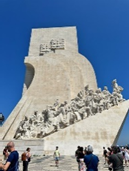
The isolated geographical position (‘where the land ends and the sea begins’) and the struggle to escape poverty and overcome the scarcity of natural resources have always been a constant in Portuguese history. It stood at the origin of the Portuguese discoveries in the 15th and 16th centuries and was the cause of successive waves of emigration.
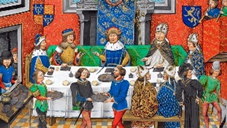
The impossibility of combining national sovereignty with regular trade relations with Spain has pushed the country towards the Atlantic and Britain was Portugal’s main trading partner for centuries. The importance of this relationship dates back to the Treaty of Windsor in 1386.
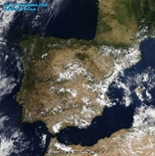
During the Estado Novo of dictator Salazar and despite the political affinities of the two autocratic regimes, Portugal and Spain kept their backs turned and trade relations between the two countries remained almost non-existent until their entry into the European Union. Nowadays, Spain is the main market for the Portuguese export of goods.
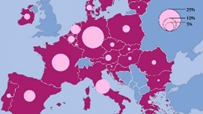
The small size of the economy and the awareness of its economic backwardness in relation to the more developed European countries is a fundamental feature of the Portuguese identity.
As said, things changed in 1986 when Portugal was integrated into the European community. Businesses got access to the latest technologies and global markets and European funds made it possible to catch up with the huge backlog in infrastructure ( i.e. roads) and education.

Paradoxically, progress did not lead to equivalent production growth, and Portuguese workers were long seen as good professionals in tasks that did not require high qualifications (construction, cleaning, clothing industry).
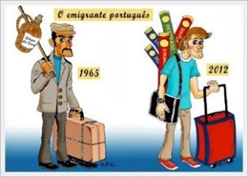
The poor growth and the financial crisis at the beginning of the 21st century lowered the country’s expectations. Many citizens lost confidence in the country’s ability to change and innovate. This loss in confidence was one of the reasons why nearly half a million Portuguese emigrated between 2010 and 2020. It also reflects the giving up of many Portuguese to change their country.
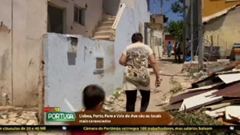
Progress was also not able to solve one of the biggest problems in society: the high incidence of poverty among the young and the elderly. Portugal is one of the most unequal countries in the EU. Being born into an economically and socially disadvantaged family is practically a condemnation and hard to tackle in a low-growth economy.
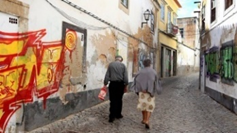
Demographic projections point to an accelerated aging and ‘shrinking’ of the population. An older population tends to be more resistant to change and innovation, which can be an obstacle to productivity growth. More innovation and investment in workers’ skills will be essential to offset the negative effects of population decline and aging.

Over the past decades, the Portuguese have accumulated one of the highest debts in the EU as a percentage of GDP. The rise in debt has coincided with a fall in savings which became one the lowest in the EU. High debt and low savings make households more vulnerable to shocks, such as the debt crisis in 2011 or the Covid-19 pandemic.
The country has definitely undergone profound economic and social changes but as long as the most qualified young people emigrate, Portugal will continue to live below its means. This is not just a failure of the economy but also of the Portuguese democracy.
Enjoy the week Aproveite a semana