
LUSOLOBO
  • Home
  • Pixels
  • About
  • Contact Us
  • Notes
  • Menu Menu

Tag Archive for: African swine fever

Blog

Javali

Steady increase in the number of wild boars in the country
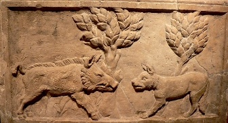
Javali (wild boar, wild swine or wild pig) has become one of the most controversial wild mammals in Portugal. Once mainly restricted in remote forested and mountainous areas, populations have rapidly expanded and are now present across much of the country.
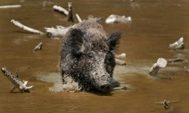
The wild boar is a pig native to much of Eurasia. The species is now one of the wides-ranging mammals in the world and has been assessed as least concern on the IUCN Red List due to its range, high numbers, and adaptability to a diversity of habitats.
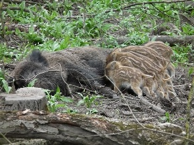
The species are divided in four regional groupings (Western, Eastern, Indian, and Indonesian). The wild boars live in matriarchal societies consisting of females and their young. Fully grown males are usually solitary outside the breeding season. The species has well developed canine teeth, which protrude from the mouths of adult males.
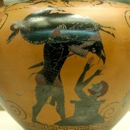
The wild boar has a long history of association with humans, having been the ancestor of domestic pig breeds as from 13,000 BCE in the Near East (Tigris Basin). The Portuguese word javali stems from the Arabic word ‘jabalii’ (meaning ountaineers’).There was also a separate domestication in China some 8,000 years ago.
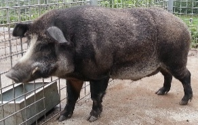
The English term ‘boar’ is mostly referred to wild males, but is also used to refer to domesticated, male breeding pigs. In domestic pigs most of their bodyweight is concentrated in the posterior, which is the opposite of wild boars, where most of the muscles are concentrated in the head and shoulders.
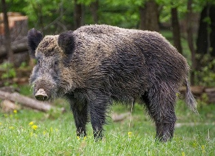
In the Mediterranean region, males average 50 kg in weight (females 45 kg). The animal’s head is very large, taking up to one-third of the body’s length, and well suited for digging. The head acts as a plough, while the powerful neck muscles allow to upturn considerable amounts of soil. The animal’s main predator in Europe is the wolf.
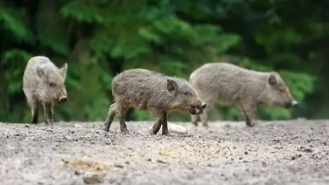
According to the European density map – produced by the international network ENETWILD with reference values from the European Wildlife Observatory (EOW) – the wild boar is, after the roe deer, the most widespread hoofed mammal in Europe, inhabiting a wide range of environments, from forests and scrubland to agricultural areas and high altitudes with harsh winters.
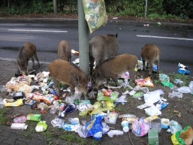
The EOW states that hunting data show a steady increase in the number of wild boars in Europe. This growth leads to concerns about damage to agriculture, traffic risks and the potential spread of infectious diseases such as African swine fever. Nowadays, Portugal is home to 400,000 wild boars with a clear increase (25%) over the past 10 years.

Happy reading                       Boa leitura                   (pic Wikip/Sapo)


June 9, 2026/by admin
https://lusolobo.com/wp-content/uploads/2026/06/Foto-Blog-Javali.jpg 540 810 admin https://lusolobo.com/wp-content/uploads/2022/12/logo-lusolobo-3-300x184.png admin2026-06-09 12:59:142026-10-07 20:06:31Javali
Recent
  • UnaffordableNovember 8, 2026 - 1:46 pm
  • VhilsOctober 20, 2026 - 9:11 am
  • GlazigOctober 19, 2026 - 5:31 pm
  • OffalOctober 6, 2026 - 2:58 pm
Comments
Tags
addiction Africa art children climate change CO2 corruption Covid19 Democracy discrimination economy education elections emigration environment EU exposition food historic history housing human rights Inequality Lisbon migration morbidity mortality origin painter plastic politics pollution population Portugal Portuguese racism Refugees slavery SNS strike tourism violence waste wildfires women

Interesting links

Ten reasons to visit Portugal

Beautiful towns

Ultimate road trip

Porto, second to none

Secrets of Monsanto

Best Algarve beach

7 Road trips

Hidden spots in Lisbon

Wandeltochten ( in Dutch)

Pages

  • About
  • Contact Us
  • Home
  • Pixels

Categories

  • Blog
  • Notes
  • Pixels

Archive

  • November 2026
  • October 2026
  • September 2026
  • August 2026
  • July 2026
  • June 2026
  • May 2026
  • April 2026
  • March 2026
  • February 2026
  • January 2026
  • December 2025
  • November 2025
  • October 2025
  • September 2025
  • August 2025
  • July 2025
  • June 2025
  • May 2025
  • April 2025
  • March 2025
  • February 2025
  • January 2025
  • December 2024
  • November 2024
  • October 2024
  • September 2024
  • August 2024
  • July 2024
  • June 2024
  • May 2024
  • April 2024
  • March 2024
  • February 2024
  • January 2024
  • December 2023
  • November 2023
  • October 2023
  • September 2023
  • August 2023
  • July 2023
  • June 2023
  • May 2023
  • April 2023
  • March 2023
  • February 2023
  • January 2023
  • December 2022
  • November 2022
  • October 2022
  • September 2022
  • August 2022
  • July 2022
  • June 2022
  • May 2022
  • April 2022
  • March 2022
  • February 2022
  • January 2022
  • December 2021
  • November 2021
  • October 2021
  • September 2021
  • August 2021
  • July 2021
  • June 2021
  • May 2021
  • April 2021
  • March 2021
  • February 2021
  • January 2021
  • December 2020
  • November 2020
  • October 2020
  • September 2020
  • August 2020
  • July 2020
  • June 2020
  • May 2020
  • April 2020
  • March 2020
  • February 2020
  • January 2020
  • December 2019
  • November 2019
  • October 2019
  • September 2019
  • August 2019
  • July 2019
  • June 2019
  • May 2019
  • April 2019
  • March 2019
  • February 2019
  • January 2019
  • December 2018
  • November 2018
  • October 2018
  • September 2018
  • August 2018
  • July 2018
  • June 2018
  • May 2018
  • April 2018
  • March 2018
  • February 2018
  • January 2018
  • December 2017
  • November 2017
  • October 2017
  • September 2017
  • August 2017
  • July 2017
  • June 2017
  • May 2017
  • April 2017
  • March 2017
  • February 2017
  • January 2017
  • December 2016
  • November 2016
  • October 2016
  • April 2016
© Copyright - Lusolobo
  • Link to X
Scroll to top Scroll to top Scroll to top