Tag Archive for: conservation

Portugal fined for environmental failings
Portugal has been fined 10 million euro’s by the Court of Justice of the European Union (CJEU) for failing to comply with the Habitats Directive (adopted in 1992), that aims to protect over a thousand species, including mammals, reptiles, amphibians, fish and plants. It also has been ordered to pay a compulsory fine of 41,250 euro’s a day until it complies with a previous court order from 2019.
The daily fine corresponds to a penalty of 750 euros for each of the sites, that the court stated had ‘still not be been protected’ despite the Portuguese Government having been ordered seven years ago to comply with EU laws. The fine will be reduced once a site is brought into compliance.
The court said in a statement that ‘these are particularly serious breaches of EU environmental law, in which Portugal has persisted’, whereas ‘its territory hosts rich biodiversity – including 99 habitat types and 335 species covered by the Habitats Directive .´
The European Commission has battled for years to try to force Portugal to conserve and protect habitats and species in areas that should have been designated for conservation under the EU Habitats Directive, that established Natura 2000– the world’s largest ecological network .
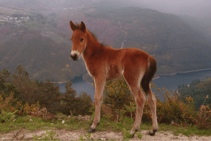

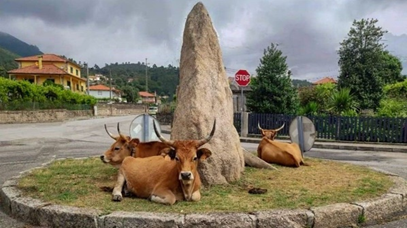
Under EU law, sites of community importance include Peneda-Geres – Portugal’s only National park – the natural park Lithoral Norte and the Minho and Lima rivers. Also included are Valongo, home to rare fern species and an important site for the golden-striped salamander, the Serra D’Arga mountain and Corno do Bico, a protected landscape.

The Government was ordered by court to comply with the EU Habitats Directive  in a case brought by the European Commission in 2019 after allegations it had failed to designate sites of community importance as special areas of conservation (SAC).

Under the directive, countries had to designate sac sites that needed protection within six years, with accompanying measures to protect rare habitats and species. In 2019 the court found that Portugal had failed to fulfil its obligations to designate 61 areas under the Atlantic and Mediterranean biodiversity classification.
Although a spokesman of the government declared that ‘’very little remains to be done for the work to be completed and to fully comply with the obligations arising from the Habitats Directive’, environmental NGO ZERO (Association for a Sustainable Terrestrial System) criticised the government for not taking the implementation of environmental projects seriously.

Enjoy your week          Aproveite a semana               (pic Sapo/Ptres)


Drought, wildfires and rising temperatures

One of Portugal’s oldest environmental groups Quercus has marked the end of 2023 with the best and worst environmental events of last year.

The creation of more marine protected areas (especially in the Azores), the rejection of a mega solar farm by the Portuguese Environment Agency APA – planned to cover an environmentally sensitive water catchment area in the Algarve – and the growing mobilization of civil society for environmental issues were seen as the most positive aspects.

But there was more good news at the local level. In September six Portuguese youngsters went to the European Court of Human Rights accusing 32 EU states of inaction on climate change. They argued that the government’s failure to reduce emissions violates their human rights.

The government raised the target of using electricity from renewable sources by 2030 to 85%, according to a revision of the National Energy and Climate Plan. Nowadays renewable energies account for 61% of electricity consumption in the country (wind energy 25%, hydroelectric 23%, solar 7%, and biomass 6%).

In terms of nature conservation and biodiversity, the Lisbon and Tagus Valley Development Commission had a negative opinion of the company Secil, which wanted to increase its exploration in the Arrábida National Park for cement production.

In 2023 the lynx population in the country continued to increase and 21 breeding pairs of Iberian imperial eagles were counted in the Alentejo province, showing that these species are recovering.

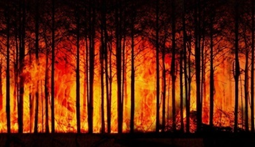
In the group of the worst environmental events Quercus stresses – in addition to big fires such as the one in Odemira, drought and rising global temperatures – the felling of trees in the name of energy transition and the EU’s approval of the herbicide glyphosate for another ten years.

‘This decision comes as a surprise given the growing scientific evidence of the health risks of the fertilizer that has been classified as carcinogenic to animals and is suspected of causing Parkinson’s disease in humans’, says the Quercus, pointing out that the highest level of contamination was detected in Portugal, with 30 times above the legal limit.

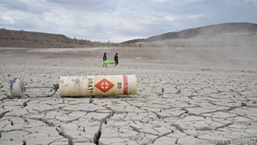
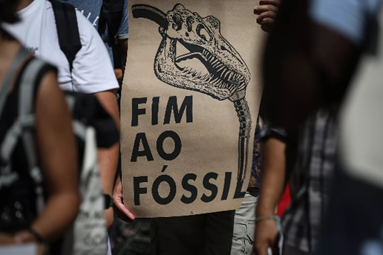
For next year, Quercus emphasizes the urgent need to end the use of fossil fuels – as defined at COP28 – improving policies for the conservation and restoration of ecosystems, better performance in waste management, and the implementation of structural measures in the face of water scarcity – especially in the south where the drought has hardly improved despite the autumn rains.

Boa semana                 Enjoy the week                     (Público/Sapo)