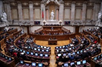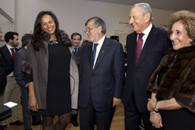

‘From now on, every time we – black women – look at the steps of the Parliament, we will not see each other with buckets and mops to clean – we are inside and have a voice ’ (Romualda Fernandes, MP)

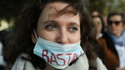
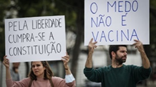
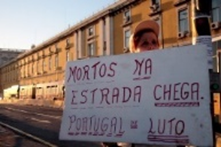
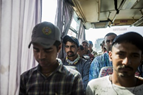
A hundred protesters marched on Saturday the 27th of June through downtown Lisbon shouting ‘Portugal is not racist’. The demonstration was organized by Andre Ventura, the leader of the Far Right-party Chega (Enough).

Last October, Ventura won the first far right’s seat in Parliament, where he will face strong opposition of three newly elected black deputies with a Guinean background, Joacine Katar, Beatriz Gomes Dias and Romualda Fernandes. Never before in history was the composition of the Assembly of the Republic that diverse.

The march was held three weeks after thousands gathered in the capital in protest against racism and police brutality and took place at a time when the authorities are worried about a new wave of coronavirus cases in the outskirts of Greater Lisbon, where new lockdown measures have been installed in 19 parishes of Sintra, Loures, Odivelas, Amadora and Santa Clara.
The European Social Survey (ESS) recently showed that nearly two-thirds of the Portuguese people have prejudices on racism; either biological (‘Are there ethnic or racial groups, by nature, more intelligent?’) or cultural (‘Are there cultures, by nature, more civilized than others?’). One in three Portuguese manifest racist opinions on both biological and cultural racism. Only 11% of the population disagrees with all racist beliefs.

The older the Portuguese are, the greater the number of people who manifest racism.
Although the majority of young people disagree that there are more intelligent ethnic or racial groups, 70% believes that certain cultures are more civilized than others.
Higher levels of education or income do not completely erase racism even though less racism is noted among these citizens.

The good news in the survey is that in recent years the position of the Portuguese against immigrants from different ethnic backgrounds has improved.
Five years ago Portugal belonged to the three EU countries that were most opposed to receiving immigrants from poor countries but it evolved towards greater openness and has become one where this objection dropped significantly.

‘However it remains to be seen how these immigrants are integrated’, underlines Alice Ramos, a sociologist at the Social Science Institute of the University of Lisbon. ‘You would have to know why people think that immigrants should enter, what jobs they should do and what they think about nationality and family reunification?
The results do not contradict the results of racist beliefs. It is one thing to give an opinion, the other is an attitude of discrimination against someone with a different ethnic background.’
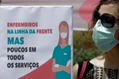
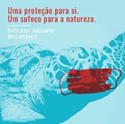
Stay healthy Fique saudável (pic Público/Sapo)


Portugal’s successful battle against Covid-19 has come under international media spotlight and regarded by many as exemplary. With a quarter of the population of big brother Spain, Portugal has around one-tenth of the number of cases and a three times lower mortality rate.
There are a number of different theories for why the virus has caused so much less suffering than in neighbouring Spain.
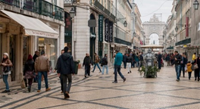
Lisbon’s streets are left to joggers and cats, its glorious beaches cordoned off, the economy asphyxiated, border crossings to Spain sealed, schools and universities
Nevertheless, the government prepares to gradually
All migrants, including asylum seekers with pending applications at immigration (Serviço de Estrangeiros e Fronteiras), will be treated as permanent residents until at least July 1, granting them full access to the National Health Service, welfare benefits, bank accounts, work, and rental contracts during the corona outbreak.
The
Portugal declared the State of
Schools in Portugal even closed before any deaths were registered.
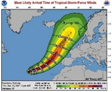
Portugal is doing comparatively well so far. But the authorities’ advice to stay at home and keep distance has to be maintained to prevent further suffering. Researchers at the Imperial College in London suggested that without these measures deaths in Portugal could reach 70,000.
With the peak of the virus predicted in May, it is becoming increasingly clear that quarantine measures in Portugal probably have to stay in force till the end of June.
To finish off with a quote of the famous Dutch footballer Johan Cruijff ‘ every disadvantage has its advantage.’
When the number of confirmed coronavirus cases surpassed the 1,000 mark – with six reported deaths – the Portuguese Government announced the State of
Non-essential business and schools closed. People urged to leave their houses only for food, medicines and walking the dog. Remote working from home became the rule.
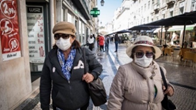
‘Social distancing’ and ‘protecting the elderly’ have become keywords in the fight against the new virus – Severe Acute Respiratory Syndrome Corona Virus 2 (SARS-CoV-2).
The intention of prime minister Antonio Costa is not to close the country down – like in France – even though he has the constitutional support with this State of Emergency to do so. The government, however, will – given the developments in Spain and Italy where the death tolls are the worst in Europe – implement further restrictions if necessary.
The Socialist Government of Antonio Costa is convinced that upgrading Montijo Air Force Base 6 on the south bank of Lisbon’s Tagus estuary, is the best option.
In addition, the national airline
Moreover, at least 30.000 citizens in the Netherlands have signed a petition objecting to the ‘ecologically disastrous plan.’ It concerns the survival of Netherlands national
Researchers also say birds are at risk of colliding with aircraft and will be driven away by the noise. The reaction of Secretary of State Alberto Souto de Miranda was stunning ‘people should not worry because birds are not
The latest obstacle in starting construction on a 1.3 billion euro project are two Communist-led
In the last four years over
Descendants to
Many of the expelled Jews have maintained the Portuguese language (or Ladino, a merger of Castilian and Portuguese), the religious and food rites of Jewish worship in Portugal and preserved family surnames, records, objects kept for generations and documents proving their Portuguese origin.