Tag Archive for: worldwide

Steady increase in the number of wild boars in the country
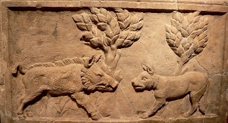
Javali (wild boar, wild swine or wild pig) has become one of the most controversial wild mammals in Portugal. Once mainly restricted in remote forested and mountainous areas, populations have rapidly expanded and are now present across much of the country.
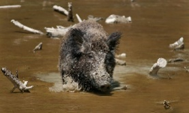
The wild boar is a pig native to much of Eurasia. The species is now one of the wides-ranging mammals in the world and has been assessed as least concern on the IUCN Red List due to its range, high numbers, and adaptability to a diversity of habitats.
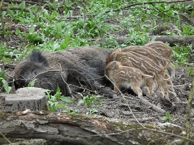
The species are divided in four regional groupings (Western, Eastern, Indian, and Indonesian). The wild boars live in matriarchal societies consisting of females and their young. Fully grown males are usually solitary outside the breeding season. The species has well developed canine teeth, which protrude from the mouths of adult males.
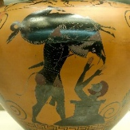
The wild boar has a long history of association with humans, having been the ancestor of domestic pig breeds as from 13,000 BCE in the Near East (Tigris Basin). The Portuguese word javali stems from the Arabic word ‘jabalii’ (meaning ountaineers’).There was also a separate domestication in China some 8,000 years ago.
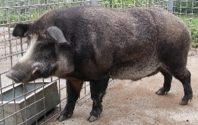
The English term ‘boar’ is mostly referred to wild males, but is also used to refer to domesticated, male breeding pigs. In domestic pigs most of their bodyweight is concentrated in the posterior, which is the opposite of wild boars, where most of the muscles are concentrated in the head and shoulders.
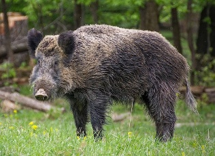
In the Mediterranean region, males average 50 kg in weight (females 45 kg). The animal’s head is very large, taking up to one-third of the body’s length, and well suited for digging. The head acts as a plough, while the powerful neck muscles allow to upturn considerable amounts of soil. The animal’s main predator in Europe is the wolf.
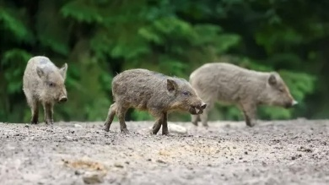
According to the European density map – produced by the international network ENETWILD with reference values from the European Wildlife Observatory (EOW) – the wild boar is, after the roe deer, the most widespread hoofed mammal in Europe, inhabiting a wide range of environments, from forests and scrubland to agricultural areas and high altitudes with harsh winters.
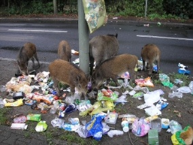
The EOW states that hunting data show a steady increase in the number of wild boars in Europe. This growth leads to concerns about damage to agriculture, traffic risks and the potential spread of infectious diseases such as African swine fever. Nowadays, Portugal is home to 400,000 wild boars with a clear increase (25%) over the past 10 years.

Happy reading                       Boa leitura                   (pic Wikip/Sapo)



Portugal plummets in 2025 Corruption Perception Index, with the worst score ever.

The watchdog Transparency International Portugal (TIP) is challenging declarations by the Ministry of Justice on the assessment of anti-corruption policies in Portugal, and rejects claims that the Anti-Corruption Agenda– one of the government’s flagships – contains a clear anti-corruption strategy.

Instead, the Ministry’s technical report 2020-2024 ‘doesn’t provide any evidence of a structured, methodologically identifiable assessment of the results of an anti-corruption strategy in the past four years.’ TIP states.

Even worse, no proposal, timetable, or implementation process is known for the period 2025-2028. ‘The absence of this new strategy raises doubts about the commitments made and the consistency between political discourse and government action,’ the corruption watchdog declares.

Meanwhile, the Ministry of Justice recently announced that it has finalized 17 of the 42 measures outlined in its National Anti-Corruption Agenda. Judge Rita Alarcão stated in the same press release that progress this far demonstrates that it is possible to act with effectiveness.

The Corruption Perception Index (CPI) is an annual indicator compiled by Transparency International that assesses the perception of corruption in the public sector on a scale from 0 (corrupt) to 100 (clean) in more than 180 countries.

Government corruption is increasing worldwide due to a lack of leadership.
This year, the global average GPI score fell for the first time in over a decade, to just 46 out of 100. The NGO’s report reveals that ‘the vast majority of countries are failing to keep corruption under control’, highlighting that two-thirds of countries score below 50 on the index.

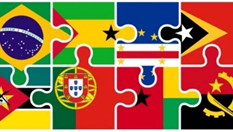
Portugal fell to 46th place, scoring just 56 points out of 100. Cape Verde ranked as the highest-placed nation with 62 points within the Community of Portuguese-Speaking Countries, leaving Brazil (35), Angola(32), and Mozambique (21) far behind.

At the same time, countries scoring above 80 fell from 12 a decade ago to just 5 (i.e. Scandinavia, Singapore), highlighting ‘a worrying trend of democracies showing a deterioration in perceptions of corruption.’ 

Analyzing the results, TIP president José Fontão points to a correlation between rising perceptions of (state) corruption and the growth of populist rhetoric attacking institutions. He called the politicians to end isolated short-term measures, and above all to show more political will to tackle abuses of power and the factors driving this decline, such as the roll-back of democratic checks and balances, and attacks on independent civil society.


It should not be forgotten that the common people are paying the price, as corruption leads to under-funded public hospitals and schools, unbuilt defences against the climate crisis, and withers the hopes and dreams of young people.

Enjoy the week            Aproveite a semana               (pic Publico/Sapo)


The largest gathering of young Catholics worldwide

According to the Census of 2021, 80% of Portuguese older than 15 years adhere to the Roman Catholic faith.
World Youth Day (WYD) is a major, religious encounter between young Catholics from all over the world and the Pope taking place for the first time this year in Portugal.

This biggest event ever is to be held from 1-6 August in Lisbon and the neighboring municipality of Loures. Around 1.5 million youngsters from 180 countries are expected. To date, more than 10,000 volunteers have been registered but 20 to 30 thousand are expected. During the event, police officers will see their holidays suspended.

The WYD occurs every two or three years in a city chosen by the Pope, lasts about a week, and is both a pilgrimage and a youth festival. The event is open to everyone between 14 and 30 years. The first WYD) took place in Buenos Aires (1987) and the last in Panama (2019).

The main ceremonies take place in the Tagus Park, north of Parque das Nações, along the Tagus river. Pope Francis will arrive on the 3rd and close the event on the 6th of August with the ‘missa do envio’ (farewell mass).

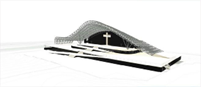
There will be an altar stage constructed at the Tagus costing about 3 million euros (after the event to be used for other shows and spectacles).
The four-meter high stage will have a capacity for 1250 people (including bishops, concelebrants, choir and orchestra, sign language interpreters, and technical staff) and covers an area of 3250 square meters.

Costs are estimated at 160 million euros. Lisbon City Council is willing to invest up to 35 million (including 21,5 million for the requalification of the Tagus Park), the Government 36,5 million, and Loures up to 10 million euros. The president of the Lisbon WYD Foundation and auxiliary bishop of Lisbon Américo Aguiar declared that the Church’s investment will be at least 80 million (30 million for feeding the participants) as the Church will be responsible for the costs of everything related to the reception of pilgrims. 

The economic return on the studies carried out in relation to Madrids WYD (2011) represented an economic benefit of around 350 million euros. ‘I assume that Portugal will have an economic return of the same magnitude’, declared José Sá Fernandes, the government coordinator of the event.

Given the expected influx of participants to the week-long Catholic jamboree prices for accommodation are already skyrocketing. Hotels in Lisbon are cited as charging over 4000 euros a week, apartments in Moscavide, Loures cost 5000 a week, an apartment in Fátima 8000 a week, and a three-bedroom apartment in the nearby Parque da Nações likely to cost 2500 euros a day!

The director of the National Department of Youth, father Filipe Diniz, believes the recent report on child sexual abuse by members of the clergy will not affect the event. In fact, he went so far as to suggest that participation in WYD could ‘increase religious vocation’.

Two tons of wheat produced in the Alentejo will be transformed by the Sisters of the Immaculate Heart of Mary Monastery in Lisbon into millions of hosts for the Eucharistic celebrations.

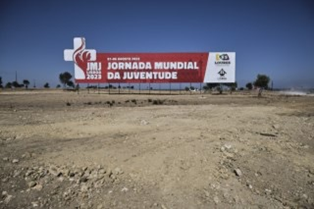
Most surprising, however, is that six months from the opening hardly any construction work has begun on site.


Enjoy the week            Aproveita a semana               (pic Público/Sapo)