Zé-Povinho
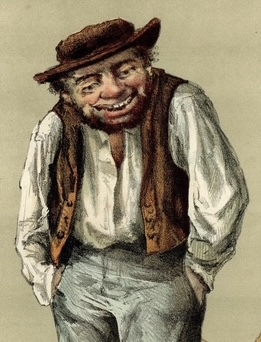
‘Zé Povinho looks from one side to the other, and stays – as always – the same’
Zé (abbreviation from José) Povinho (‘little people’) is a caricature of the Portuguese everyman, created by Rafael Bordalo Pinheiro – journalist, socialist, publisher of satirical newspapers, and ceramist – in the second half of the 19th century.
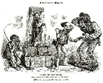
The figure became a symbol of the Portuguese working-class people, critiquing in a humorous way the main social, political and economic problems in the Portuguese society.
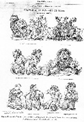
The cartoon made its first appearance in the newspaper A Laterna Mágica (the Magic Lantern) in 1875. Zé Povinho is often depicted with his mouth open and not intervening, resigning when faced with injustice or corruption and unaware of the big issues in the country. He is an expression of the common, simple man.

He became a popular figure of the Portuguese people in the tri-dimensional ceramic form made by the Bordalo Pinheiro factory in Caldas da Rainha – 75 km north of Lisbon – that is celebrating its 150th anniversary this year.

The Bordalo Pinheiro museum in Lisbon opened an exhibition last week commemorating the anniversary of the creation of the character Zé Povinho by visual artist Bordalo Pinheiro (1846-1905).
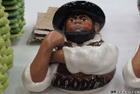
The exhibition (until September 6) is entitled TOMA! – referring to the figure’s characteristic gesture of the arm, representing his revolt and insolence – and presents 400 Zés Povinhos created over one and a half century.

The collection brings together pieces by various artists, from its creator to well-known contemporary artists and anonymous potters in the most surprising materials; from glass to magazine covers and textiles.
The museum director, João Alpuim Bothelho, emphasizes that Bordalo Pinheiro’s humour always has a political touch but is not populist and that Zé Povinho is a ‘universal figure’ due to his essence, giving as an example the many foreign visitors who find a parallel figure in their own home countries.
Enjoy your week Aproveite a semana (pic Lusa/Sapo)