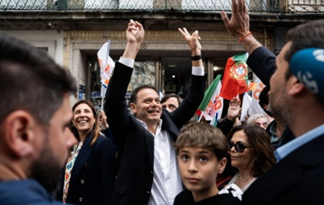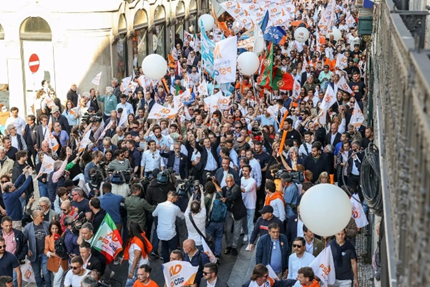
Driving issues in the local elections were housing, public health and education

Portugal’s far-right, xenophobic, nationalist and biggest party in the country Chega (‘Enough’) – defending the reduction of state intervention in the economy, promoting stricter immigration, supporting chemical castration for child abusers and incessantly attacking the Roma population – has won its first three mayoral seats in municipal elections on Sunday, the 12th of October.
But fell well short of expectations as its vote share halved from Parliamentary elections in May.

Of the merely three municipalities it captured, it won 49% of the vote in São Vicente (Madeira), 40,5% in Albufeira (Algarve) – which its leader André Ventura has called ‘the party’s stronghold’, and the springboard for Portugal’s ‘conquest’ by the far right – and 37% in Entroncamento (Tagus Valley).
The ruling centre-right Social Democratic party (PSD) – focusing on liberalising the economy and associated with conservative values – won the largest share of mayoral races, capturing 136, including the country’s five biggest cities – Lisbon, Porto, Gaia, Sintra and Cascais – up from 114 four years ago.

Together with the more conservative Christian Democratic party (CDS) – with six elected mayors on his own list – it has formed the Democratic Alliance (AD), which is governing the country since last spring.

The PSD ‘victory’ also means the party wins control of both national municipal associations, ANAFRE – the association of parish councils – and ANMP, the association of municipalities, which fell to PS Socialists over a decade ago.
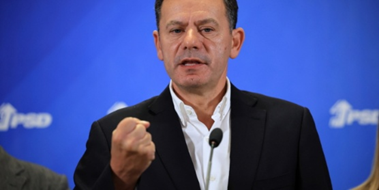
‘This is very relevant’, Prime Minister Luís Montenegro declared. ‘The party now has more parish council presidents, more city council presidents and achieved historic victories in the country’s five largest municipalities, while leading the two autonomous regions (Azores and Madeira) and having a majority in parliament.’
Its centre-left Socialist (PS ) rivals – defending State intervention in the economy to improve social justice – won 128 (22 down compared to four years ago) of the total of 308 municipalities in the country and is no longer the most voted party in the local elections. But the party is pleased, for reversing the awful general elections result of last May.

Voters in Lisbon returned to the incumbent mayor – Carlos Moedas, heading a centre-right coalition – less than six weeks after a deadly funicular crash that killed 16 people, including 11 tourists, and caused a national outcry. Moedas, a rising star in the PSD, has rejected blame for the 3 September accident – most likely a break in the cable linking the two carriages – and refused to resign.
He scored 42% against 34% for the Socialist (PS) candidate Alexandra Leitão.
After three national elections in the past two years, Portuguese voters will again return to the polls next January for a presidential vote.
Enjoy your week Aproveite a sua semana (Pic Público/Sapo)