Tag Archive for: preservation

‘We cared for her for over 13 years, and she will be hugely missed, but we could not see her living alone any longer’ – Antwerp’s zoo director.
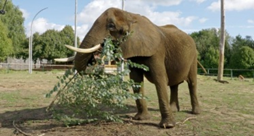
Kariba, a female elephant from the zoo in Antwerp, Belgium will be the first resident to arrive at a new large-scale sanctuary being created on land located in the Alentejo – i.e. in the municipalities of Vila Viçosa and Alandroal.
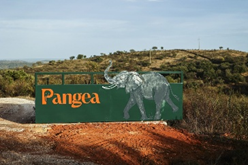
‘We expect Kariba to arrive early next year,’ revealed Kate Moore, the managing director of the non-profit organization Pangae.
The elephant came from Zimbabwe to Europe, where she lived the last 40 years in various zoos, but will end up living her final years in the sanctuary

Regarding the budget, the director said that – over approximately 10 years – the organization expects to invest 15 million euros.

Pangea was set up to solve a practical problem. Over 600 elephants are living in captivity across Europe. Most EU states have banned the use of elephants in circuses and zoos, yet without sanctuary space, they are hard to implement. Lack of alternatives means that the animals languish alone or in unsuitable conditions for years on end.
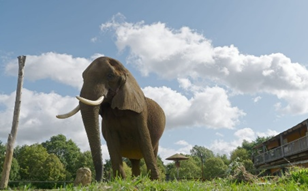
‘Elephants are deeply intelligent, sentient and social. Their needs are complex, and when not met, they suffer,’ emphasizes the director.
‘Our mission is to provide lifelong sanctuary with both specialist care and a space to live with dignity and autonomy in the most natural surroundings possible.’  

Miguel Repas, the organization’s technical consultant, explains that the reserve will provide the animals with ‘tranquillity, peace and freedom,’ and therefore will not be open to the public. However, programs for schools are planned, and a so-called ‘discovery centre’ will be created, offering experiences and interactions with elephants
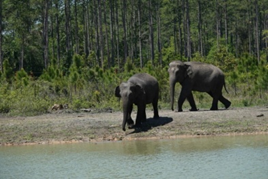
Remembering that the sanctuary’s future guests ‘have never had contact with nature’, the biologist stressed, and that the animals will ‘have to relearn how to live in the wild and socialize’ with other elephants.
The sanctuary will have stables to house the elephants, a central support services area and fences capable to withstand a load of 60 tons.
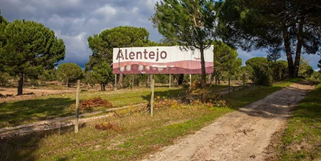
The two mayors from Vila Viçosa and Alandroal welcome the initiative and the opportunities it brings.‘This is a project the Alentejo can be proud of. Pangea benefits not only elephants but our communities too: new jobs, business for local suppliers and visitors to the region.’
With an estate of 1,000 acres, this will be the first large-scale reserve in Europe for elephants that lived in captivity, with a capacity for up to 30 animals.


Boas Festas                                 Happy Holiday     (pic Luso/Sapo)
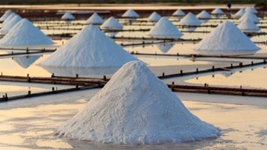


Salt is the sea unable to return to the sky’

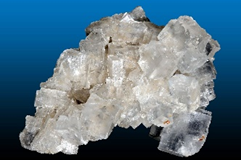
Salt is a mineral primarily composed of sodium chloride (NaCl). It either exists in a crystalline form – known as rock salt – or is diluted in seawater.
In ancient times – when it was a rare and precious commodity – salt was used as part of the Roman soldier’s wage. His monthly allowance was called ‘salarium’ (from the Latin word sal), which later became salary, a word still used as payment for work.

Salting always has been a well-known method of food preservation and archaeological evidence of fish preservation in southern Portugal dates back to the Phoenicians (7th century BC). Sea salt is also mentioned in the Vinaya Pikata, a Buddhist scripture from the 5th century BC.


Most salt in the world is mined and results from extracting natural salt deposits out of the ground, usually in the form of halite (also known as rock salt). Salzburg in Austria was named ‘City of Salt’ because of its mines. Ancient China (3rd century BC) was one of the earliest civilizations with trade in mined salt.


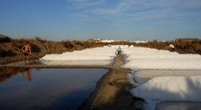
Sea salt is harvested in shallow pans by the evaporation of seawater. A thousand liters of fresh seawater provide around 23 kg of salt. Traditional salt production in Portugal mainly occurs in the South, between Olhão and the Guadiana river, bordering Spain. The industry flourished in the 1970s and 80s but almost disappeared after the collapse of the Algarve fish canning industry.


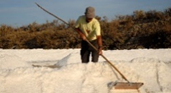
Artisanal sea salt crystallizes at the bottom of rectangular salt pans (salinas) and is raked into piles with a wooden rake called rodo every 3-4 weeks.


Flor de Sal (flower of salt) – similar to the French Fleur de Sel – is the salt made
of thin floating, ultra-white and friable crystals that form on the surface of the water when in the salt pan reaches super saline conditions.


The delicate crystals are manually skimmed from the surface with handcrafted butterfly-shaped sieves called barboletas. Flor has a grain structure, soft taste, high mineral content, and is popular in culinary circles.


The European Commission recently draw up new specifications in which almost all kinds of salt – including mine salt –  is labeled ‘organic’. This step has led to strong protests from salt producers in Portugal, Spain, France, Italy, Croatia, and Slovene, who are organized in the European Federation of Hand-Harvested Sea Salt Producers.


‘Due to how it is produced, mine salt should not receive the organic quality seal’, declares a Federation spokesman. ‘This would leave many artisanal producers out of business as they would be unable to compete with the huge amounts of salt produced industrially at low costs.’


Gourmets believe sea salt tastes better than ordinary table salt and that Portuguese salt it is one of the best artisan salt you can buy, especially as a Christmas gift.

Stay healthy                          Fique saudável            (pic Ptres/Ptnews)