
God created only water but man made wine – Victor Hugo
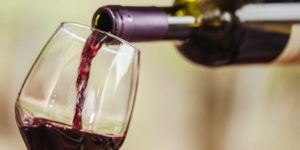 Portuguese drink the most wine worldwide, on average 1 litre per person per week.
Although no major producer, export – mainly to France, Brazil and the US – reached record levels last year. ‘Domestic consumption also increased substantially, due to a booming tourism industry,’ declares Jorge Monteiro, president of ViniPortugal.
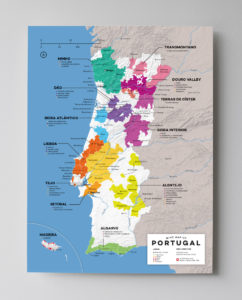 Portugal’s wine culture developed in relative isolation for more than 2000 years. Many grape varieties – there are over 250 indigenous ones – do not grow elsewhere in the world.
The most famous wines are Port – a fortified and sweet wine from the Douro Valley, nowadays a Unesco world heritage site, Vinho Verde – a unique white wine from the Minho area, Dão – a quality wine, shown to age very well from growing in high altitude areas and the typical blends from the Alentejo region.
But would you still buy a bottle of wine with a label ‘alcohol causes cancer’ on it?
The Irish government – equating alcohol with tobacco – has recently passed a law (the Irish Alcohol Bill), that such a warning should be put on every bottle of wine, every can of beer and every flask of whiskey. As with cigarettes.
This kind of labeling is a thorn in the eye of the Portuguese wine industry, who fears a similar action in the EU.
 ‘To state that wine causes cancer is simply untrue’, says Georg Sandeman, chairman of the Portuguese Wine and Spirits Association (ACIBEV). ‘Northern countries want to impose their culture on us. In the north of Europe, people use to drink a lot in short periods of time (‘binge drinking’) and often without food. Here, wine is part of our culture, our gastronomy. Of course, excessive use should be reduced but not moderate consumption.’
The WHO, already since the 90’s, claims that alcohol raises the risk of cancer of the throat, esophagus, liver, and breast. More recent research shows that even moderate consumption is not without risk of cancer and cognitive decline.
In addition, the Organisation for Economic Cooperation and Development (OECD) warns, that alcohol is the third leading risk factor for disease and death after tobacco and hypertension in Europe.
 The best advice, therefore, is to stick to the American Cancer Society’s guidelines. ‘If you don’t drink, don’t start and if you do drink, limit your consumption to one drink a day for women (who need more time to metabolize alcohol) and two for men’.
BOM FIM DE SEMANA ENJOY YOUR WEEKEND (pic SAPO)
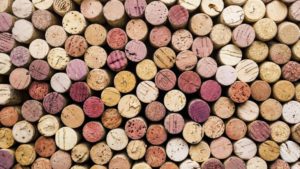 Portugal is de belangrijkste producent van kurk in de wereld en exporteert sinds kort zelfs meer kurk dan wijn. Hoewel het merendeel van de productie naar champagne – en wijnproducerende landen gaat, wordt kurk ook gebruikt voor vloertegels, isolatie en decoratie. Recent is zelfs een ecologische verantwoorde zeep van kurk op de markt gekomen.
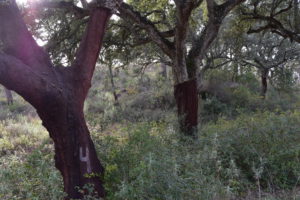 Kurk wordt gewonnen uit schors van de kurkeik, die vooral in de droge, zuidelijke Alentejo provincie uitstekend gedijt. De bomen worden ongeveer 200 jaar oud en kunnen vanaf de leeftijd van 25 jaar elke 9 jaar worden geschild. In 2011 werd de kurkeik uitgeroepen tot “boom des vaderlands.”
 ‘Er zijn dingen die nooit met woorden verklaard kunnen worden’
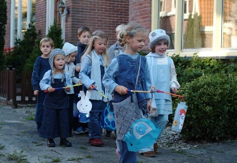 Als er vanavond tussen 6 en 8 aan de deur wordt gebeld, kunt u daar een kluitje verkleumde kinderen aantreffen – met bleke gezichtjes, zwak beschenen door de flakkerende lichtjes van hun lampionnen – die het onmiddellijk op een zingen zetten. En o wee als er geen snoep in huis is. Dan wordt het hele repertoire opnieuw afgewerkt, maar nu dreigender. Op 11 november wordt in diverse landen Sint Maarten gevierd, maar dat gebeurt niet overal op dezelfde manier.
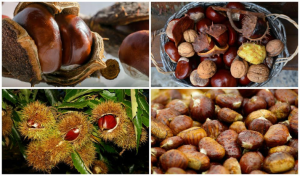 Sint Martinus