‘Hormuz’ probably derives from the Persian pronunciation of the principal Zoroastrian god Ahuramazda (also known as Ormazd or Horomazes)
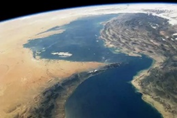
The Strait of Hormuz – 34 km wide at its narrowest point between Iran and Oman – is in the news every day. The instability in the Middle East and the American and Israeli aggression against the people of Iran have once again placed this strait at the centre of international geopolitics.

A significant proportion of the world’s energy (i.e. oil and gas) passes through here, and any threat to navigation in this strategic waterway proves to have an immediate impact on the global economy.
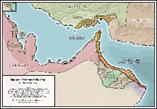
But few people know that, for over a century (1515-1622), this very strait was under the governance of Portugal, controlling the entrance to the Persian Gulf, one of the world’s most important trade routes.
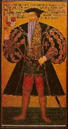
The Portuguese conquest of Hormuz occurred when the Portuguese admiral and conqueror Afonso de Albuquerque established a fortress – named Nossa Senhora da Conceição (Our Lady of the Immaculate Conception) – on Hormuz island, thereby giving the Portuguese full control of the trade between India and Europe through the Persian Gulf.
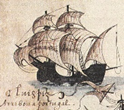
The campaign against Hormuz was a plan of King Manuel I of Portugal to thwart Muslim trade in the Indian Ocean by capturing Aden – to block trade through the Red Sea, Hormuz – to block trade through Beirut – and Malaca to control trade with China.
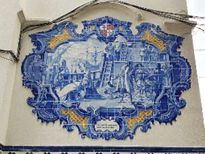
The island of Hormuz was then not ruled by the young king Turan Shah, but by its vizier, Rais Nurredin Fali. After taking Hormuz, Albuquerque adopted the principle of indirect rule: the king was allowed to rule his kingdom as a vassal of the Portuguese Crown, but it was disarmed, and the Portuguese took control of the defence, effectively turning it into a protectorate.
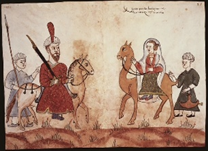
During the 16th century, Hormuz became the most cosmopolitan city in the world. Merchants from many different places gathered in their markets: Persians, Arabs, Jews, Armenians, Indians and Europeans. A world of wealth and luxury, best captured in the Arab saying: ‘if the world was a golden ring, Ormuz would be the jewel in it.’
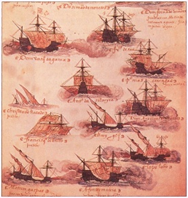
With all maritime transport between the Far and Middle-East passing through Hormuz, the total annual revenue – paid in ashrafi gold coins – was enormous, as pearls from the Persian Gulf, Indian spices, Chinese silk and the war-horses trade from Arabia to Goa in India, were heavily taxed. Of all the Portuguese possessions in the Orient, Hormuz became a vital source of income for the Portuguese State of India, part of the Portuguese Empire

Hormuz would remain a Portuguese client-state until its fall to a combined English-Persian force in 1622. Today it is part of the Iranian province of Hormozgan.
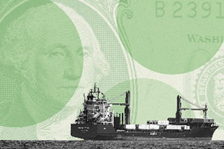
Iran’s closure of the Strait of Hormuz constitutes a violation of the UN Convention on the Law of the Sea (UNCLOS) – neither ratified by Iran and the US – by denying transit in a strait used for international navigation. According to the North-American newspaper The Atlantic, the crisis is the largest in the history of the global oil market.
Happy Easter Feliz Páscoa (pic Sapo/Lusa)