‘I don’t write the books, it’s my own hand working independently’
“A revolutionary in Portuguese literature
A psychiatrist never considering being anything else than a writer
A writer marked by the colonial war in Angola
A colonial war that brought ‘ghosts’ and ‘death’ to his work
It wasn’t Lobo Antunes who lost the Nobel Prize, the Nobel Prize lost him
Writing as a ‘virus’ and a generation that is ‘passing away’
His exhilarating novels forced Portugal to confront its darkest moments.”

António Lobo Antunes – one of the most important voices in modern Portuguese literature who died on the 5th of March at the age of 83 – published 41 books, 32 of which are novels. His books often resist straightforward plot, instead unfolding through overlapping monologues in which multiple voices circle the same events from different angles.

He was the second Portuguese writer – after Fernando Pessoa – to be included in the prestigious Bibliothèque de la Pléiade and several times nominated for the Nobel Prize, which he never received.

His exacting modernistic style provoked a lifelong controversy between him and that other icon of the Portuguese literature – José Saramago – who did win the Nobel Prize in 1998.
However, many in Portugal felt the honour had gone to the wrong writer.
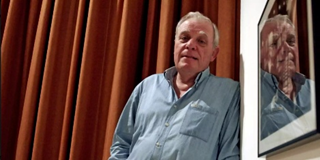
He was trained as a psychiatrist, worked in the Miguel Bombarda hospital in Lisbon and wrote in the evenings. From 1971 to 1973 he served as an army doctor in Angola. His experience during Portugal’s brutal colonial war marked him profoundly and the war’s moral disorientation and emotional wreckage would haunt much of his fiction.

His first novels – Elephant’s Memory and South of Nowhere – both published in 1979 – drew on his experiences as a young doctor navigating the political and personal upheavals of post-revolutionary Portugal, and brought him instant acclaim.
In South of Nowhere (Os Cus de Judas), a veteran addresses his blood-soaked memories to a silent woman in a Lisbon bar, but in fact directed at a Portugal that has all but forgotten its war crimes.
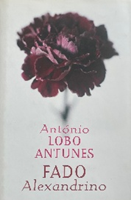
But it was his magnum opus Fado Alexandrino (1983) – capturing the generation’s disillusionment with the colonial war – that confirmed his status as a major literary voice. In novels such as The Inquisitor’s Manuel (1996) and The Splendour of Portugal (1997), he explored the lingering shadows of colonialism, the hypocrisy of the Portuguese elite and the dysfunction of family life.

Act of the Damned (1985) is set in the aftermath of the 1974 Carnation Revolution that saw the end of dictator Salazar’s Estado Novo regime. The book inhabits the minds of a landed aristocratic family as they congregate at the deathbed of its patriarch, keen on their inheritance. Meanwhile, communists are baying for blood, and the family must flee.

Through widely acclaimed internationally and translated into many languages. Lobo Antunes remained relatively little known in the English-speaking world. He is survived by his third wife, his three daughters and his three brothers
Enjoy your week Aproveite a semana (pic Publico/Sapo)