‘Zé Povinho looks from one side to the other, and stays – as always – the same’

(abbreviation from José) Povinho (‘little people’) is a caricature of the Portuguese everyman, created by Rafael Bordalo Pinheiro – journalist, socialist,  publisher of satirical newspapers, and ceramist – in the second half of the 19th century.
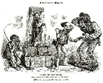

The figure became a symbol of the Portuguese working-class people, critiquing in a humorous way the main social, political and economic problems in the Portuguese society.
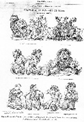
The cartoon made its first appearance in the newspaper A Laterna Mágica (the Magic Lantern) in 1875. Zé Povinho is often depicted with his mouth open and not intervening, resigning when faced with injustice or corruption and unaware of the big issues in the country. He is an expression of the common, simple man.

He became a popular figure of the Portuguese people in the tri-dimensional ceramic form made by the Bordalo Pinheiro factory in Caldas da Rainha – 75 km north of Lisbon that is celebrating its 150th anniversary this year.

The Bordalo Pinheiro museum in Lisbon opened an exhibition last week commemorating the anniversary of the creation of the character Zé Povinho by visual artist Bordalo Pinheiro (1846-1905).

The exhibition (until September 6) is entitled TOMA! – referring to the figure’s characteristic gesture of the arm, representing his revolt and insolence – and presents 400 Zés Povinhos created over one and a half century.

The collection brings together pieces by various artists, from its creator to well-known contemporary artists and anonymous potters in the most surprising materials; from glass to magazine covers and textiles.

The museum director, João Alpuim Bothelho, emphasizes that Bordalo Pinheiro’s humour always has a political touch but is not populist and that Zé Povinho is a ‘universal figure’ due to his essence, giving as an example the many foreign visitors who find a parallel figure in their own home countries.

Enjoy your week                   Aproveite a semana               
(pic Lusa/Sapo)
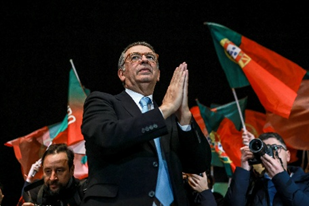
We need a country that is prepared, not surprised’ (President elect)

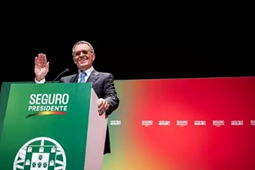
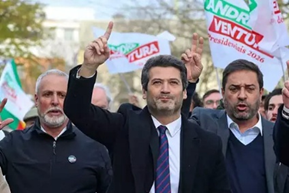
In spite of the unprecedented floods and landslides as a result of the last two weeks’ train of storms, people turned out in surprising numbers for the presidential elections last Sunday. The former Socialist leader António José Seguro got 67% of the vote – almost twice as many as his rival, Chega leader and far-right populist André Ventura – and more than any other president before him.

Even in areas where voting has been delayed due to the bad weather and lack of conditions to open polling stations – comprising approximately 0.3% of the electorate – Seguro was the most voted candidate.

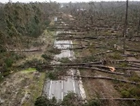
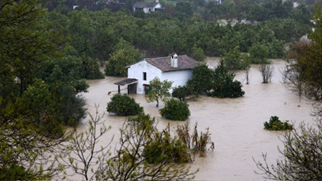
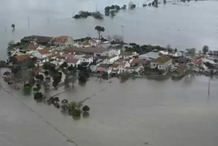
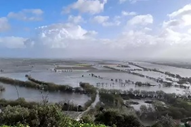
In less than three weeks, mainland Portugal has been raided by six storms – Ingrid, Joseph, Chandra, Kristin, Leonardo and Marta – which were accompanied by heavy rainfall. The damage caused by the extreme weather already amounts to more than 4 billion euros, and so far 15 people have lost their lives during this national calamity.

But it’s not over yet. The continuing rain and rising river levels – especially of the Tejo, Douro and Mondego –  are leading to extensive flooding and landslides, as a result of the completely saturated soils. These extreme events will occur with greater violence because of the climate crisis, which leads to warmer atmospheres and oceans.

A recent report of the McKinsey Global Institute concluded that a quarter of the country is currently exposed to climate risks – floods, forest fires and drought – and that the government will need to invest double the amount it currently spends on climate resilience.

Although Portugal’s presidency is a largely ceremonial role, it holds some key powers, including the ability to dissolve parliament under certain circumstances, to call snap elections, and to veto legislation.

The longstanding moderate socialist Seguro – who paradoxically has won the support of mainstream politicians on the right wanting to halt the rising populist tide – assured the Portuguese, however, that he has no interest in changing he constitution, in increasing the president’s powers, nor in dissolving the current minority government.

Last May, the far-right Chega party became the second largest parliamentary force, overtaking the Socialists and landing behind the centre-right ruling alliance, which garnered 31.2%.
‘With more than 32% of the vote this month, Chega managed to exceed the government’s share of the vote, reinforcing Ventura’s project to cannibalise the rightwing space in the country.

Keep your feet dry         Mantenha os pés secos (pic Público/Sapo)

We are not a perfect city, but definitely on the right track’ (Guimarães 26)

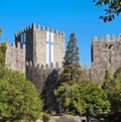
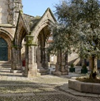
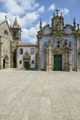
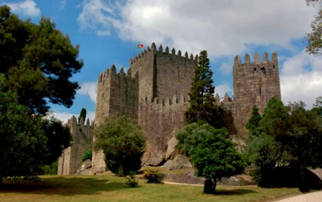
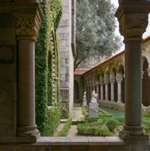
Guimarães – just 65 km inland from Porto – has been elected European Green Capital 2026, the second Portuguese city to win the title after Lisbon in 2020.  

The European Green Capital Award – organized by the European Commission – recognizes and rewards local efforts to improve the environment and the quality of life in cities. Tangible results include 600,000 euros in financial support, which will be used for sustainable projects.

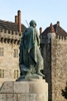
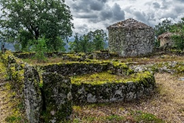
The town is considered to be the birthplace of Portugal because it was here that Afonso Henriques – the first king of Portugal- was born. Founded in the 10th century, the historic centre became the first capital of Portugal in the 12th century.

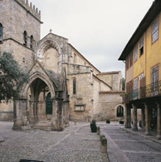
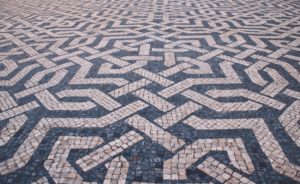
Its historic centre is extremely well-preserved and an authentic example of the evolution of a medieval settlement into a modern town. Its rich building typology exemplifies the development of Portuguese architecture from the 15th to the 19th  centuries.

A particular type of construction was developed in the Middle Ages, featuring a ground floor in granite with a timbered-framed structure above. A technique that was later transmitted to the Portuguese colonies in Africa and the New World.

Today this historic city has evolved into a beacon of cultural and environmental excellence, mixing its rich heritage with forward-thinking commitment to sustainability, which was embraced as a cornerstone of its local culture. Innovative businesses are increasingly aligning with the city’s environmentally conscious policies.

Designated a UNESCO Heritage Site in 2001, Guimarães has since then earned prestigious titles: European Capital of Culture (2012), European City of Sport (2013) and most sustainable municipality in Portugal for three consecutive years. These achievements underscore the city’s innovative spirit despite its modest and relatively young (nearly half under 30 years) population of 157.000 residents.

The municipal ecological footprint initiative serves as a guiding framework, steering Guimarães toward becoming a ‘One-Planet City’ and a member of Zero Waste Europe. Meanwhile, the city has pioneered groundbreaking strategies such as PAYT (Pay-As-You-Throw). Over 95% of its residents assess the air quality as good or very good.

Wander newly created green city oases and artfully repurposed heritage buildings, or stroll along the banks of restored riverbanks, with a fleet of electric buses linking together the historic palaces and futuristic galleries. The British broadcaster BBC recently highlighted this green and confident city as one of the best places to visit in 2026.

The opening ceremony of the European Green Capital 26 took place on the 9th of January, and during the year various events are planned, from the Spring Festival (in March 21-22) and the Green Week Guimarães (in June 4-7) to the National Urban Cleaning Meeting (in September 8-10).

Enjoy the festivities         Aproveite as festividades        (Pic Sapo/Unesco)