Navigator

He championed navigation but never actually sailed on any voyages himself
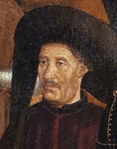
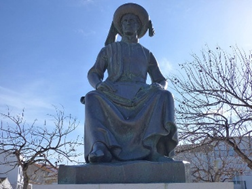
Prince Henry of Portugal (1394-1460), better known as Henry the Navigator, was a central figure in the 15th-century Portuguese maritime exploration and regarded as the main initiator of what would be known as the Age of Discovery. He was the third surviving son of King John I of Portugal and his wife Philippa of Lancaster, sister of King Henry IV of England.
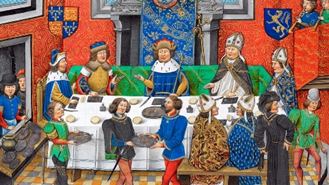
This royal alliance strengthened ties between Portugal and England, still the world oldest continuous treaty. Prince Henry became a statesman, but his passion was exploration. However, Henry was not an explorer himself but a patron and visionary who financed and organized expeditions. Under his direction, Madeira and the Azores were discovered, and the groundwork laid for future discoveries.
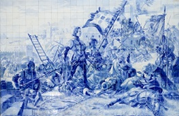
Prince Henry was 21 when he, his father and his brothers conquered the Moorish port of Ceuta (northern Morocco), a base for Barbary pirates who raided the Portuguese coast and captured their inhabitants to be sold in the African slave trade.
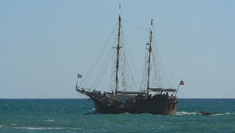
Following this success, Henry began to explore the coast of Africa in order to find the source of the West African Gold trade. At that time, cargo ships were too slow and heavy to undertake such voyages. Under his direction, a much lighter, faster and highly manoeuvrable ship was developed – the caravel.
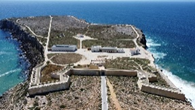
Both Sagres and Lagos have strong ties to Prince Henry. At Sagres, the windy southwestern tip of Europe – once called ‘o Fim do Mundo’ (the End of the World) – he established his base, where cartographers, astronomers and navigators refined maps and exchanged ideas.
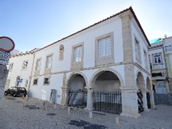
The port of Lagos proved to be convenient for his expeditions. Most of the voyages sent out by Henry consisted of one or two caravels that navigated by following the African coast. Lagos also had its darker side. In 1444, the first cargo of enslaved Africans arrived in Europe’s first slave market.
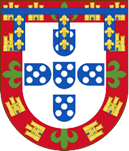
At the age of 26, he was appointed as the Governor of the Military Order of Christ, the Portuguese successor to the Knights Templar, which had its headquarters at Tomar in central Portugal. Henry’s work was financed through profits from the Order of Christ, which inherited the Templars’ vast wealth. The red cross that adorned Portuguese sails comes from this order.
During Prince Henry’s time, the Portuguese navigators perfected the North Atlantic ‘return from the sea’ (volta do mar), the dependable pattern of trade winds blowing largely from the east near the equator and the returning westerlies in the mid-Atlantic. This was a major step in the history of navigation. Understanding oceanic wind patterns became crucial in enabling the main route between the New World and Europe.
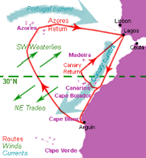
Portuguese mariners who sailed south and southwest toward the Canary Islands and West Africa would afterwards sail far to the northwest – away from continental Portugal and seemingly in the wrong direction – before turning northeast near the Azores islands and finally east to Europe in order to fully utilize the prevailing winds for their journey.
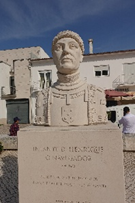
That time, Cape Bojador was the most southern point known to Europeans on the coast of Africa. Although superstitious sailors believed that beyond the cape lay the end of the world, Prince Henry was determined to know the truth. He sent 15 unsuccessful expeditions over a ten-year period before finally succeeding in passing the Cape, circumventing the Muslim land-based gold and slave trade across the western Sahara. This rerouting of trade made Portugal rich.
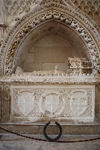
Henry’s died with doubts as to whether a sea route could be found to the Far East, but his work paid off when Bartolomeu Dias rounded the Cape of Good Hope in 1488. Subsequently, Vasco da Gama arrived in India in 1498, Pedro Álvares Cabral discovered Brazil in 1500, and Ferdinand Magellan’s expedition completed the first circumnavigation of the globe in 1521.
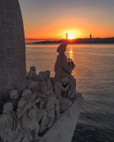
All of this stemmed from Prince Henry’s investment in ships, knowledge and charts, which led to the foundation of Portugal’s maritime supremacy.
That’s why he is depicted in the front of the Monument of the Discoveries (Padrão dos Descobrimentos ) located on the edge of the Tagus river in Lisbon.
Happy reading Boas leituras