
‘We cared for her for over 13 years, and she will be hugely missed, but we could not see her living alone any longer’ – Antwerp’s zoo director.
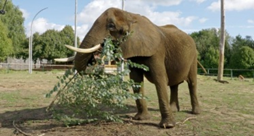
Kariba, a female elephant from the zoo in Antwerp, Belgium will be the first resident to arrive at a new large-scale sanctuary being created on land located in the Alentejo – i.e. in the municipalities of Vila Viçosa and Alandroal.
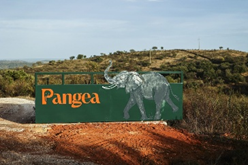
‘We expect Kariba to arrive early next year,’ revealed Kate Moore, the managing director of the non-profit organization Pangae.
The elephant came from Zimbabwe to Europe, where she lived the last 40 years in various zoos, but will end up living her final years in the sanctuary
Regarding the budget, the director said that – over approximately 10 years – the organization expects to invest 15 million euros.

Pangea was set up to solve a practical problem. Over 600 elephants are living in captivity across Europe. Most EU states have banned the use of elephants in circuses and zoos, yet without sanctuary space, they are hard to implement. Lack of alternatives means that the animals languish alone or in unsuitable conditions for years on end.
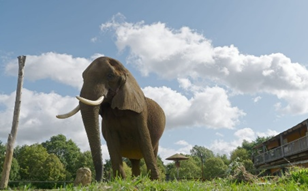
‘Elephants are deeply intelligent, sentient and social. Their needs are complex, and when not met, they suffer,’ emphasizes the director.
‘Our mission is to provide lifelong sanctuary with both specialist care and a space to live with dignity and autonomy in the most natural surroundings possible.’

Miguel Repas, the organization’s technical consultant, explains that the reserve will provide the animals with ‘tranquillity, peace and freedom,’ and therefore will not be open to the public. However, programs for schools are planned, and a so-called ‘discovery centre’ will be created, offering experiences and interactions with elephants
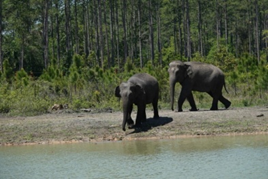
Remembering that the sanctuary’s future guests ‘have never had contact with nature’, the biologist stressed, and that the animals will ‘have to relearn how to live in the wild and socialize’ with other elephants.
The sanctuary will have stables to house the elephants, a central support services area and fences capable to withstand a load of 60 tons.
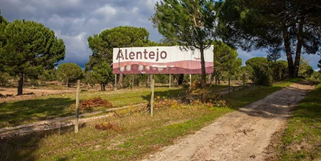
The two mayors from Vila Viçosa and Alandroal welcome the initiative and the opportunities it brings.‘This is a project the Alentejo can be proud of. Pangea benefits not only elephants but our communities too: new jobs, business for local suppliers and visitors to the region.’
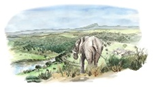
With an estate of 1,000 acres, this will be the first large-scale reserve in Europe for elephants that lived in captivity, with a capacity for up to 30 animals.
Boas Festas Happy Holiday (pic Luso/Sapo)
Patron saint of children, sailors and the poor
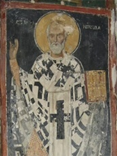
Nicholas (270 – 343 AD) was born in the third century in the region of Lycia. At that time, the area was Greek but is now called Demre, situated on the southern coast of Turkey. He was made Bishop of Myra – the metropolis of Lycia – while still young. The oldest source of his life is the Praxis de stratelatis – written around 337 – which can be translated as ‘the officers’ adventure.’
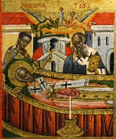
The Greek bishop became known for his generosity, his love for children and his concern of sailors. He died on the 6th of December, 336 AD in Myra and was buried in his cathedral church. In 1087 – due to war in the area- concerned Christians moved his relics to Bari, a seaport on the southeast coast of Italy, where they are kept in the Basilica di San Nicola.
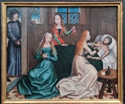
Throughout the centuries, many legends have been told about him. One miracle story tells about a poor man with three daughters. In those days, a young woman’s father had to offer prospective husbands something of value to offer, a dowry.
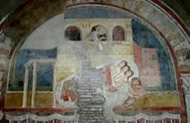
To save the girls from being sold into servitude, St Nicholas tossed three bags of gold into the shoes of the daughters – left before the fire to dry – providing the desperately needed dowries. This led to the custom of children putting out their shoes, eagerly awaiting gifts from St Nicholas.
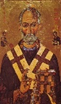
Another legend tells of three students travelling to Athens. A wicked innkeeper robbed and murdered them, preserving their remains in brine. Nicholas, traveling along the same route, dreamed of the crime and prayed to God to return them to life.
Elsewhere, the story is told about three small children who were lost, lured and killed by an evil butcher. St Nicholas appeared and prayed to God to restore them to life. This made St Nicholas the patron and protector of students and children.
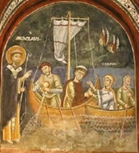
One of the stories about St Nicholas and the sea goes as follows. Returning by sea – after making a pilgrimage to the Holy Land – a mighty storm threatened to wreck the ship. Nicholas prayed. The terrified sailors were amazed when the wind and waves suddenly calmed, sparing them all. That’s why St Nicholas also became the patron saint of sailors and travellers.
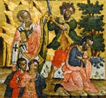
Other stories mention Nicholas saving people from famine and saving lives of innocent people from unjust execution.
Within a century of his death, he was celebrated as a saint.
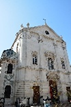
As his popularity spread during the Middle Ages, thousands of churches in Europe were named after him, including 22 in Portugal. The São Nicolau church in Lisbon was built between 1209 and 1229 and is located in the Baixa, between the Rua da Prata and de Rua dos Douradores.
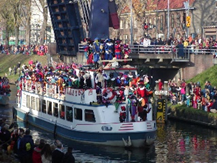
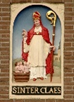
The anniversary of his death – on December 6th – is widely celebrated in Europe. In the Netherlands, Sinterklaas ‘arrives’ each year in mid-November on a steamboat from Spain and rides on a white horse. An elderly man with white hair and a long beard. He wears a long red cape, dons a red mitre and holds a long ceremonial shepard’s staff with a fancy curled top.
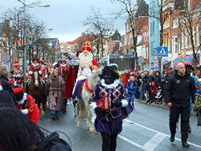
In the weeks before the 6th of December, he is said to ride his horse over rooftops at night, delivering presents through the chimney to the well-behaved children. Overnight, Dutch children leave carrots and apples in their shoes for the saint’s horse, hoping the good saint will exchange them for sweets or small gifts.

On December 5th – the eve of the feast day – St Nicholas is celebrated by sharing candies (thrown into the living room), chocolate initial letters, surprise gifts with humorous rhymes and Sinterklaas songs. Parents and family ‘fool’ the children into thinking that Sinterklaas has really given them presents

In the 1600s, Dutch settlers brought ‘Sinterklaas’ to New Amsterdam (nowadays New York), linguistically evolving into ‘Santa Claus.’ Although connected, they are not the same figure.
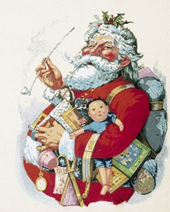
Santa Claus ( also known as Santa) is a modern, mythical secular evolution of the historical Christian saint, appearing in American print by the late 1700s.
A plump, joyful, nocturnal gift-bringer with a deep, hearty laugh, depicted in a fur-rimmed red suit and a red hat, who flies over rooftops in a sleigh pulled by eight reindeer and bringing presents on Christmas Eve.
Also in Portugal, but then as Pai Natal (Father Christmas).
Boas Festas Happy Holidays